
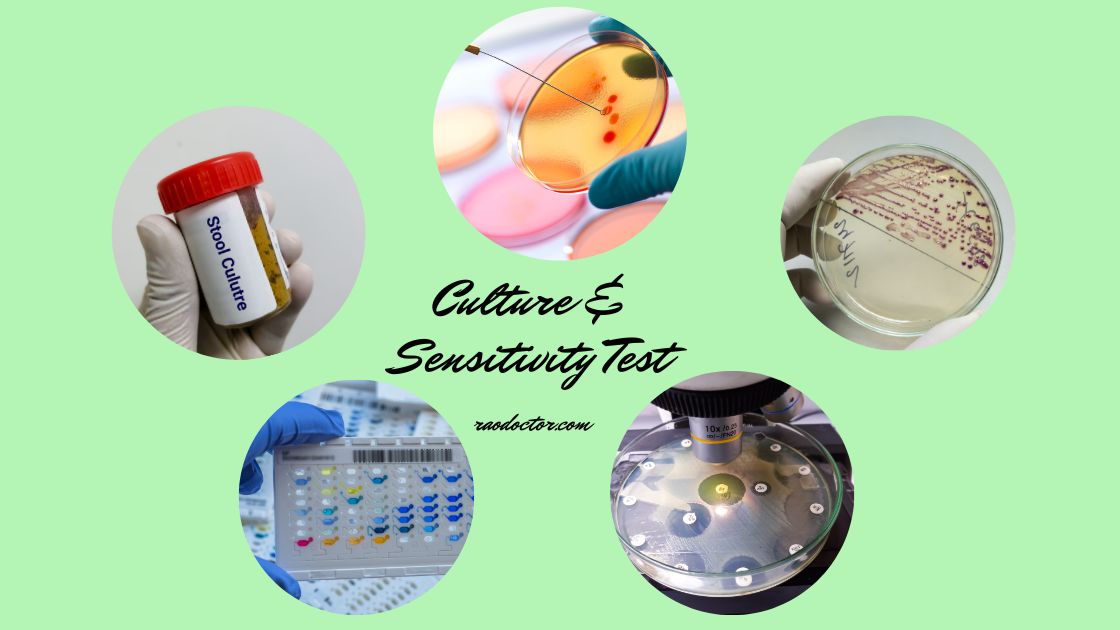
What is Culture and Sensitivity test?
Culture and sensitivity test is a laboratory diagnostic test that is used to identify the causative organism responsible for an infection and determine which antibiotics will be effective in treating it. It is carried out by a microbiologist or a pathologist.

The test typically involves taking a sample from the infected area, such as blood, urine or wound discharge, and placing it in a culture medium. The culture is then observed over time to see if any bacteria or fungi grow. The different types of culture mediums used commonly are described below.
Once the organism is identified, it is tested against different antibiotics to see which ones will be most effective [or sensitive to] in treating the infection.
Types of C&S
There are different types of culture and sensitivity tests that can be conducted depending on the type of infection and the sample being tested.
Some common types include urine cultures, blood cultures, wound cultures and sputum cultures.
Urine cultures are used to identify urinary tract infections, while blood cultures are used to detect bloodstream infections.
Wound cultures are used to diagnose infections that occur in open wounds, while sputum cultures are used to identify respiratory infections.
Culture media available for C&S test
Some of the popular culture media used frequently by pathology labs include:
- Blood Agar – A culture medium used for the growth of bacteria and fungi that helps in determining the hemolytic activity of the organism.
- MacConkey Agar – This culture medium is used to select and isolate Gram-negative bacteria and differentiate them based on lactose fermentation.
- Sabouraud Dextrose Agar – It is a culture medium used for the growth of fungi and yeast.
- Chocolate Agar – A culture medium used to grow fastidious bacteria, particularly Haemophilus influenzae.
- Mueller-Hinton Agar – A culture medium used for antibiotic susceptibility testing of bacteria.
- Thioglycolate Broth – A culture medium used for anaerobic culture and can help determine the oxygen sensitivity of an organism.
- Lowenstein-Jensen Medium – A culture medium used for the growth of Mycobacterium tuberculosis.
- Brain-Heart Infusion Agar – A culture medium used for the growth of fastidious bacteria.
- Cystine Lactose Electrolyte Deficient Medium (CLED) – This culture medium is used to isolate and differentiate urinary tract pathogens.
- Tryptic Soy Agar – A general-purpose culture medium used to grow a wide range of microorganisms.
Examples:
- Blood agar is used for the culture sensitivity test of Streptococcus pneumoniae.
- MacConkey agar is used for the culture sensitivity test of Escherichia coli.
- Sabouraud Dextrose Agar is used for the culture sensitivity test of Candida albicans.
- Chocolate agar is used for the culture sensitivity test of Haemophilus influenzae.
- Mueller-Hinton agar is used for the culture sensitivity test of Staphylococcus aureus.
Uses of Culture and sensitivity test
Culture and sensitivity tests have a variety of uses in clinical practice. They are often used to diagnose infections in patients who are experiencing symptoms such as fever, pain or swelling.
They can also be used to monitor the effectiveness of antibiotic therapy in patients with chronic infections.
Culture and sensitivity tests can help doctors make informed decisions about which antibiotics to prescribe, helping to minimize the development of antibiotic-resistant strains of bacteria.
Conclusion
Overall, culture and sensitivity tests are important tools in the fight against infectious diseases and play a critical role in patient care.
These tests are frequently used in diseases with organisms that are resistant to antibiotics and antifungal medicines. Sensitivity to medicines helps the doctor find the best medicine to fight the concerned organism.