
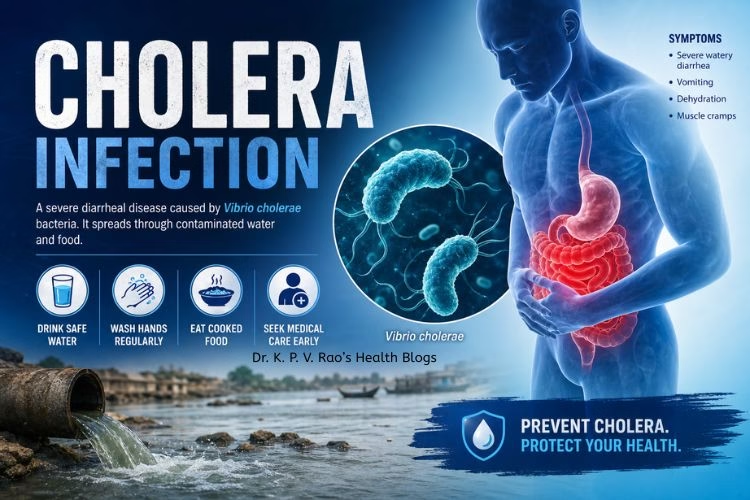
What is Cholera?
How Contaminated Drinking Water Fuels Rapid Cholera Outbreaks
In my previous article, I briefly described 7 Gastrointestinal Diseases That Spikes In Monsoon. In this article, we discuss the first one- Cholera.
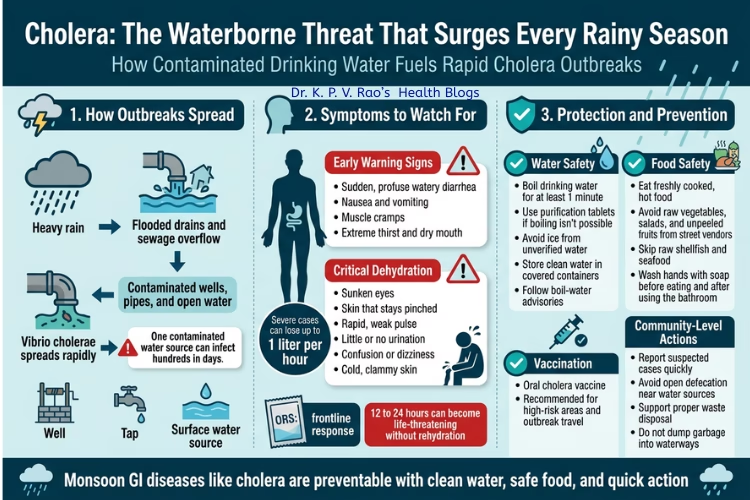
In India, every monsoon season, the same dangerous pattern repeats itself. Heavy rains flood drainage systems, overflow sewage lines, and push fecal matter directly into drinking water sources.
Disclaimer
The information in this article is intended for reference purposes only, is informative in nature, and is not intended as individual advice. I advise consultation with a qualified health professional or your family physician to assess your individual health concerns”
That single chain of events is why cholera — caused by the bacterium Vibrio cholerae — erupts so fast and spreads so wide during the rainy season. And this happens mostly in rural and semi-rural towns, where there is lack of proper sanitary measures.
The bacteria thrive in water contaminated by human waste. When floodwaters mix with wells, municipal pipes, and open water sources, Vibrio cholerae travels silently through communities.
One contaminated water source can infect hundreds of people within days.”
What makes this especially dangerous is that many people in high-risk areas [eg. villages and semi-urban towns] still rely on surface water, poorly protected wells, or tap water with compromised infrastructure — all of which become much more vulnerable during heavy monsoon rainfall.
Street food and local vendors also play an unexpected role. When vendors use contaminated water for washing produce, making ice, or cooking, the bacteria spread beyond just what people drink directly.
A single glass of street-side lemonade or a plate of washed salad greens becomes a potential source of cholera infection.”
The speed of cholera outbreak transmission is what makes cholera one of the most alarming waterborne diseases during monsoon season.
In dense urban neighborhoods and rural areas with poor sanitation, a small local outbreak can escalate into a public health emergency within a week.
Key Symptoms to Recognize Before Dehydration Becomes Life-Threatening
Cholera does not ease you in slowly. It hits hard and fast. Knowing what to watch for can be the difference between quick recovery and a medical emergency.
Early Warning Signs
- Sudden, profuse watery diarrhea — often described as “rice-water stools” because of its pale, watery appearance
- Nausea and vomiting that start abruptly
- Muscle cramps, particularly in the legs, caused by rapid loss of electrolytes
- Extreme thirst and a dry mouth
Signs That Dehydration Is Becoming Critical
| Symptom | What It Means |
|---|---|
| Sunken eyes | Severe fluid loss |
| Skin that doesn’t bounce back when pinched | Significant dehydration |
| Rapid, weak pulse | Cardiovascular strain |
| Little or no urination | Kidney stress |
| Confusion or dizziness | Dangerous electrolyte imbalance |
| Cold, clammy skin | Circulatory shock developing |
The terrifying thing about cholera is how quickly a person can lose fluids — in severe cases, up to one liter per hour through diarrhea alone. A healthy adult can go from feeling fine to being in life-threatening shock within 12 to 24 hours if rehydration doesn’t start immediately.
Children, the elderly, and anyone with a weakened immune system are at even higher risk of rapid deterioration. If you notice the warning signs of critical dehydration in anyone — especially a child — this is not a “wait and see” situation. Get medical help right away.
Oral rehydration salts (ORS) are the frontline response to cholera-related dehydration. If you’re in a monsoon-prone area, keeping ORS packets at home is genuinely smart preparation.
Proven Steps to Protect Your Family from Cholera Exposure
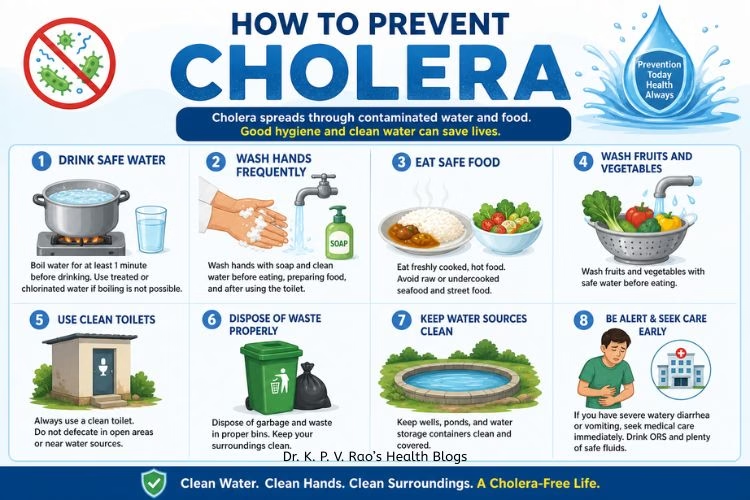
Protecting your family from cholera comes down to controlling two things: the water you drink and the food you eat. During monsoon season, both deserve serious attention.
Water Safety
- Boil drinking water for at least one full minute before consuming it, especially during and after heavy rain
- Use water purification tablets (chlorine or iodine-based) if boiling isn’t possible
- Avoid ice made from tap or unverified water — ice at roadside stalls is a common overlooked risk
- Store clean water in covered, clean containers to prevent recontamination
- Check for municipal boil-water advisories during flood events and take them seriously
Food Safety
- Eat food that has been freshly cooked and is served hot
- Avoid raw vegetables, salads, and unpeeled fruits bought from street vendors during monsoon season
- Skip raw shellfish and seafood — cholera bacteria accumulate heavily in filter-feeding shellfish
- Wash your hands with soap before eating and after using the bathroom — this simple habit breaks the transmission chain more reliably than almost anything else
Vaccination
An oral cholera vaccines are available and recommended for people in high-risk areas or those traveling to regions with active outbreaks. If you live in a cholera-prone region, talk to your doctor about whether vaccination makes sense for you and your children.
Community-Level Actions
Individual precautions matter, but cholera prevention at a larger scale also depends on:
- Reporting suspected cholera cases to local health authorities quickly
- Avoiding open defecation near water sources
- Supporting proper waste disposal during flood conditions
- Not dumping garbage into waterways that drain into community water supplies
Monsoon GI diseases like cholera are largely preventable with the right information and consistent habits. The rains will come every year — but with clean water practices and basic food safety, cholera doesn’t have to come with them.
Affiliate Disclosure
Some links in this article are affiliate links. This means:
- If you click a link and make a purchase, I may earn a small commission.
- You pay nothing extra—your price stays the same.
- Your purchase helps support this site and keeps new content coming.”
Thank you for your support.
Useful Links:
My next article is on the second disease- Typhoid. Be sure to save/bookmark this link- Dr. K. P. V. Rao’s Health Blogs, for direct access to further updates.
Adios.
Cholera: The Waterborne Threat That Surges Every Rainy Season Share on X