
Introduction
Every monsoon season, rising floodwaters transform familiar streets into contaminated channels carrying sewage, waste, and disease-causing microbes.
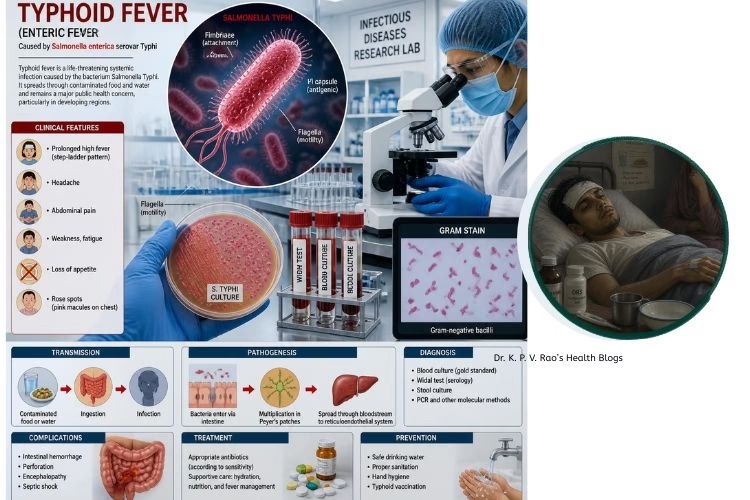
Among the most dangerous pathogens circulating in this mix is Salmonella typhi, the bacterium responsible for typhoid disease. While cholera often dominates public attention during monsoon-related gastrointestinal outbreaks, typhoid is equally serious—and far more insidious.
Its slow onset, subtle early symptoms, and ability to spread silently through contaminated food and water make it a major public-health threat during heavy rains.
Understanding how flooding accelerates Salmonella typhi bacterium, recognizing early warning signs, and adopting preventive habits can dramatically reduce the risk of severe illness.
How Flooding Turns Everyday Environments Into Typhoid Hotspots
Floodwater is not just rainwater. Once drainage systems overflow, floodwater becomes a toxic mixture of sewage, industrial waste, garbage, and microbes.
In densely populated urban neighborhoods and rural regions with limited sanitation infrastructure, this contamination spreads rapidly.
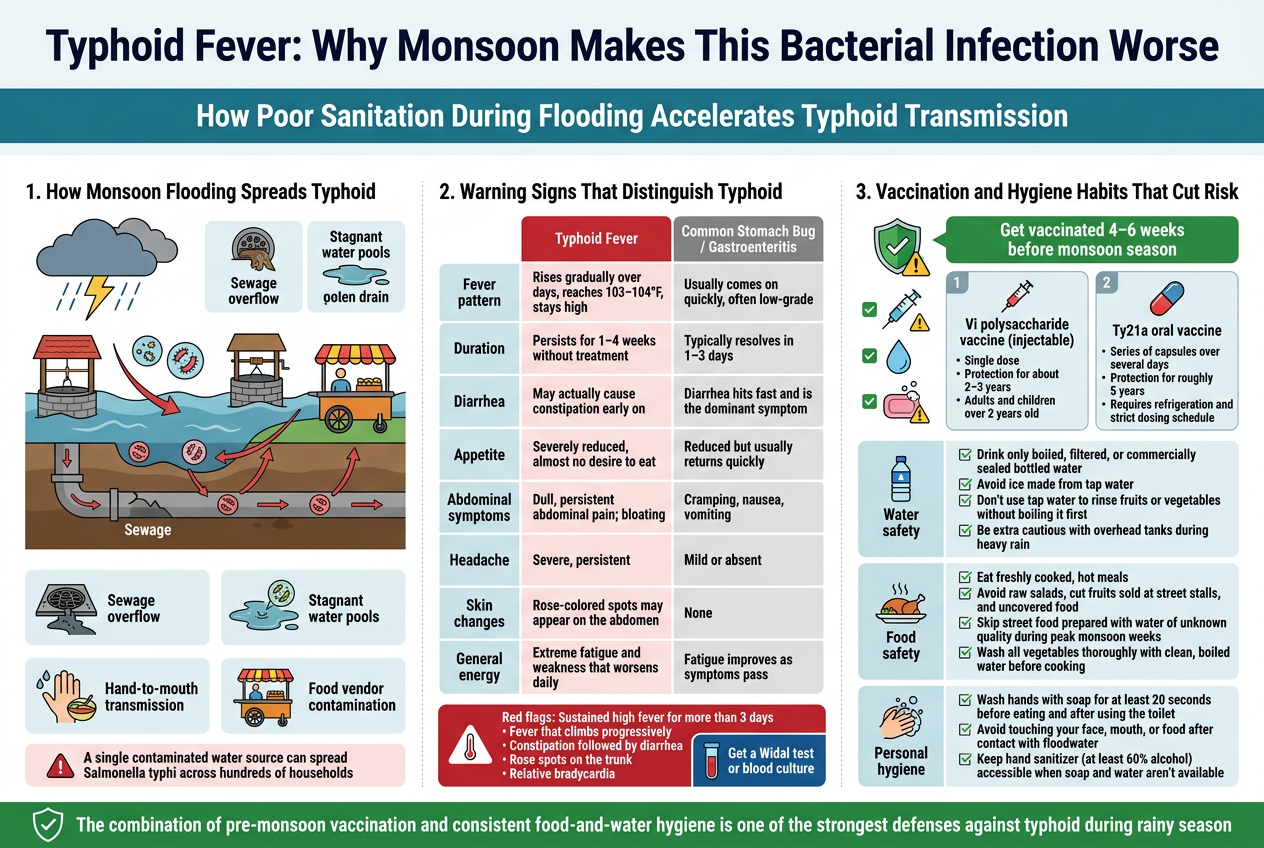
1. Sewage Overflow Contaminates Drinking Water
During intense rainfall, drainage systems cannot cope with the volume of water. Raw sewage backs up into open drains, wells, borewells, and even overhead tanks.
When drinking water sources mix with sewage, Salmonella typhi gains direct access to households.
A single contaminated water source can infect dozens or even hundreds of people before the problem is detected.”
2. Stagnant Water Becomes a Reservoir for Bacteria
Pools of stagnant water form in low-lying areas. These pools allow bacteria to survive for long periods, contaminating vegetables, fruits, and any uncovered food.
Vendors washing produce or utensils with contaminated water unknowingly contribute to transmission.”
3. Hand-to-Mouth Transmission During Flooding
People often wade through floodwater to commute or access essential services. If hands are not washed thoroughly afterward, bacteria transfer directly to food.
In crowded homes, shared meals and utensils amplify the spread.”
4. Street Food Becomes a High-Risk Source
Street vendors frequently rely on tap water for cooking, washing, and cleaning. During monsoon flooding, this water is often contaminated. Food prepared under such conditions becomes a direct route for typhoid transmission.
Flooding essentially breaks the barrier between sewage and daily life. When sanitation collapses, typhoid spreads quietly and efficiently.”
Typhoid vs. Common Stomach Infection: How to Tell the Difference
Many people dismiss early typhoid symptoms as a routine stomach infection. This delay in seeking care allows the bacteria to invade the bloodstream and organs, increasing the risk of complications such as intestinal perforation, internal bleeding, and sepsis.
Typhoid disease has a distinct clinical pattern that differs from typical gastroenteritis.
Key Differences in Symptom Patterns–Typhoid vs Common Stomach Ailment
| Symptom | Typhoid Fever | Common Stomach Bug / Gastroenteritis |
|---|---|---|
| Fever pattern | Gradual rise over days; reaches 103–104°F; remains high | Sudden onset; often low-grade |
| Duration | Persists 1–4 weeks untreated | Resolves in 1–3 days |
| Diarrhea | Constipation early; diarrhea later | Diarrhea is early and dominant |
| Appetite | Markedly reduced | Mild reduction; returns quickly |
| Abdominal symptoms | Dull pain, bloating | Cramping, nausea, vomiting |
| Headache | Severe, persistent | Mild or absent |
| Skin changes | Rose spots on abdomen | None |
| Energy levels | Extreme fatigue worsening daily | Fatigue improves as illness resolves |
Red Flags That Suggest Typhoid
- High fever lasting more than 3 days
- Fever that climbs progressively instead of spiking and breaking
- Constipation followed by diarrhea
- Faint rose-colored spots on the trunk
- Relative bradycardia (slow pulse despite high fever)
If these symptoms appear during monsoon season, especially in areas affected by flooding, medical evaluation is essential.
Diagnostic tests such as the Widal test or blood culture can confirm typhoid early, allowing timely treatment and preventing complications.”
Typhoid Fever Vaccination: Your Best Pre-Monsoon Defense
Unlike many monsoon-related gastrointestinal infections, typhoid has effective vaccines. Getting vaccinated before the rainy season significantly reduces the risk of severe infection.
Available Vaccines:
- Vi Polysaccharide Injectable Vaccine
- Single dose
- Protection lasts 2–3 years
- Suitable for adults and children above 2 years
- Ty21a Oral Vaccine
- Multiple capsules taken over several days
- Protection lasts around 5 years
- Requires refrigeration and strict adherence to dosing
Vaccine efficacy ranges from 50–80%, depending on exposure levels and individual immune response. While not perfect, vaccination provides a crucial layer of protection—especially when combined with strong hygiene practices.
Ideally, vaccination should be completed 4–6 weeks before monsoon begins, giving the immune system time to build adequate defense.”
Daily Hygiene Habits That Significantly Reduce Typhoid Risk
Vaccination alone cannot counteract the intense exposure to contaminated water and food during monsoon flooding. Consistent hygiene habits are essential.
Water Safety
- Drink only boiled, filtered, or sealed bottled water
- Avoid ice made from tap water
- Do not rinse fruits or vegetables with unboiled tap water
- Be cautious with overhead tank water during heavy rains
Food Safety
- Eat freshly cooked, hot meals
- Avoid raw salads, cut fruits from street vendors, and uncovered food
- Skip street food during peak monsoon weeks
- Wash vegetables thoroughly with boiled or filtered water
Personal Hygiene
- Wash hands with soap for at least 20 seconds before eating and after using the toilet
- Avoid touching your face or food after contact with floodwater
- Keep alcohol-based hand sanitizer accessible
Home Hygiene
- Disinfect kitchen surfaces and utensils regularly
- Cover cooked food to prevent contamination by insects
- Enforce strict hand hygiene for children, who are more vulnerable to severe typhoid
When practiced consistently, these habits dramatically reduce the chances of ingesting Salmonella typhi.
How do doctors treat typhoid?
Doctors typically treat typhoid fever with antibiotics such as ciprofloxacin, azithromycin, or ceftriaxone.
In some cases where we see blood in stools, suggesting perforation of the small intestines, we recommend hospitalization.
Supportive care, including hydration and rest, is also important. Vaccination, as mentioned above, may be recommended for prevention in high-risk areas, especially in the pre-monsoon period.
Disclaimer
The information in this article is intended for reference purposes only, is informative in nature, and is not intended as individual advice. I advise consultation with a qualified health professional or your family physician to assess your individual health concerns”
The Bottom Line
To summarize, let’s watch this video:
Monsoon flooding creates ideal conditions for typhoid transmission by breaking down sanitation barriers and contaminating water and food sources.
Recognizing early warning signs, getting vaccinated before the rainy season, and maintaining strict hygiene habits form a powerful defense against this potentially life-threatening infection.
Typhoid may not always make headlines, but during monsoon season, it remains one of the most persistent and preventable gastrointestinal threats.
Staying vigilant—and prepared—can protect households and communities throughout the rainy months.
My next article focuses on another common monsoon-related gastrointestinal disease- Hepatitis A.
You can get my latest articles on Dr. K. P. V. Rao’s Health Blogs. Be sure to bookmark/save this link.
Adios.
Typhoid During Monsoon: Symptoms, Causes, Prevention, and Vaccination Share on X