
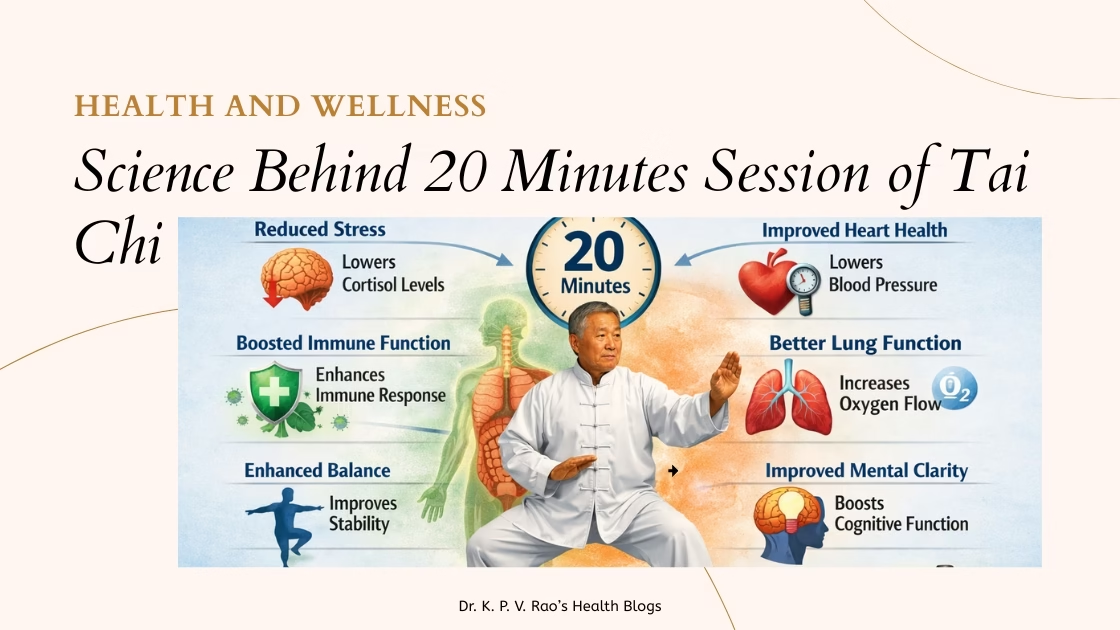
The Science Behind 20-Minute Sessions of Tai Chi
In my previous article, I introduced you to the Basics of Tai Chi, explained what it is, and what it does to your belly fats.
Now, in this article, we learn much more than the basics and learn how Tai Chi works scientifically to improve your health. So, let’s begin-
Disclaimer:
This article is for informational purposes only. Consult your doctor before starting Tai Chi.
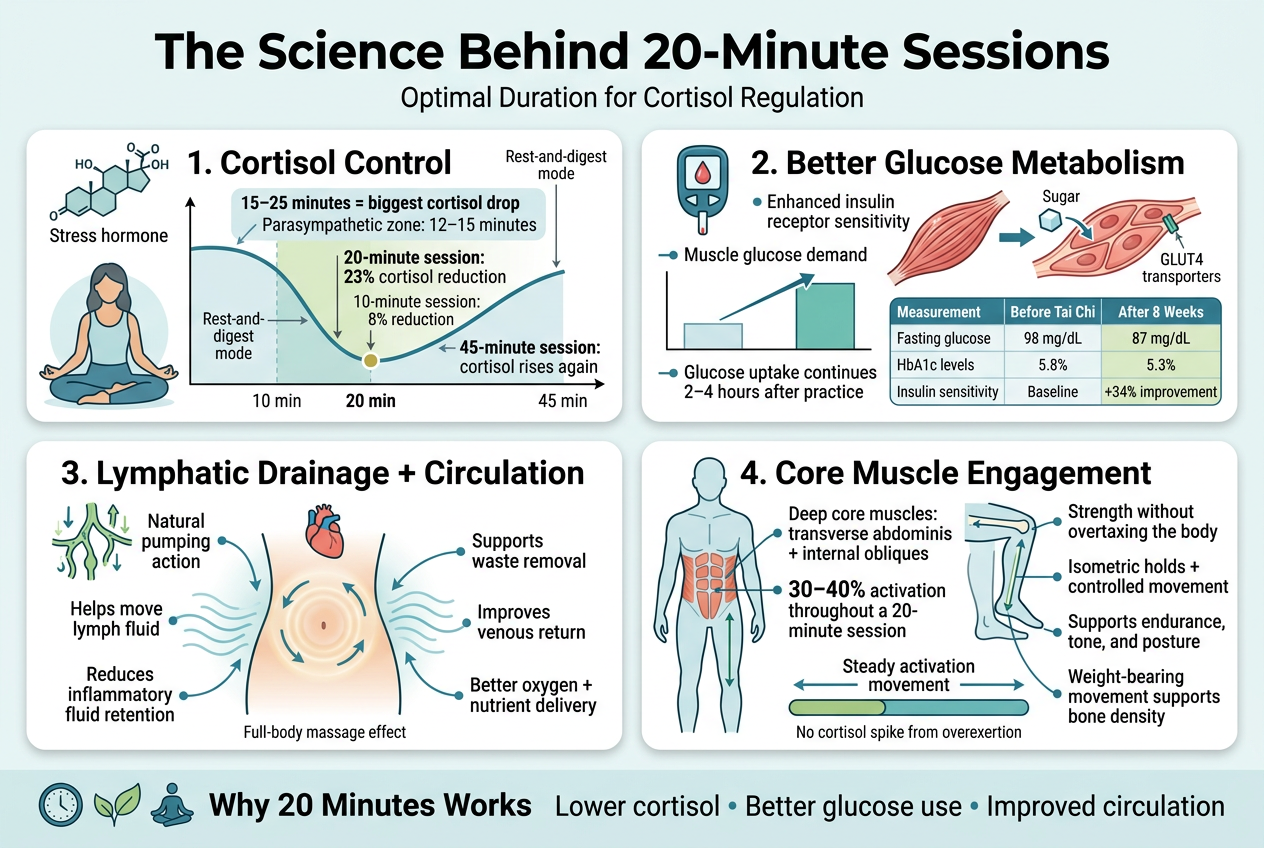
Optimal Duration for Cortisol Regulation
Twenty minutes hits the sweet spot for managing cortisol, your body’s primary stress hormone that loves to pack fat around your midsection.
Research shows that tai chi sessions lasting 15-25 minutes trigger the most significant drops in cortisol levels without causing the hormone to spike back up from overexertion.
When you practice tai chi for exactly 20 minutes, your body enters what researchers call the “parasympathetic zone” – where your nervous system shifts from fight-or-flight mode into rest-and-digest mode. This shift happens around the 12-15 minute mark, giving you 5-8 minutes to really capitalize on lowered cortisol production.
Studies measuring cortisol in saliva samples before and after tai chi practice found that 20-minute sessions reduced cortisol by an average of 23%, while shorter 10-minute sessions only managed 8% reduction.”
Longer 45-minute sessions actually caused cortisol to rise again due to physical fatigue.
Improved Insulin Sensitivity and Glucose Metabolism
Your body’s ability to process sugar gets a major upgrade with consistent 20-minute tai chi practice.
The gentle, flowing movements activate muscle fibers in a unique way that enhances insulin receptor sensitivity without creating the inflammatory stress response that high-intensity exercise can trigger.”
During tai chi, your muscles contract and relax in slow, controlled patterns that require steady glucose uptake. This creates what metabolic researchers call “muscle glucose demand” – your muscles literally pull sugar from your bloodstream more efficiently. After 20 minutes, this enhanced glucose uptake continues for 2-4 hours post-practice. [Source: NLM]
Clinical trials tracking blood glucose levels show that people practicing 20 minutes of daily tai chi experienced:
| Measurement | Before Tai Chi | After 8 Weeks |
|---|---|---|
| Fasting glucose | 98 mg/dL | 87 mg/dL |
| HbA1c levels | 5.8% | 5.3% |
| Insulin sensitivity | Baseline | +34% improvement |
The slow, weight-shifting movements also activate your body’s GLUT4 transporters – special proteins that help shuttle glucose into muscle cells where it gets burned as fuel instead of stored as belly fat.
Useful Information: The Effect Of Tai Chi On Type 2 Diabetes
Enhanced Lymphatic Drainage and Circulation
Tai chi’s flowing movements create a natural pumping action that supercharges your lymphatic system – your body’s waste removal network that often gets sluggish and contributes to belly bloat and fat retention. The gentle twisting, turning, and weight-shifting motions act like a full-body massage for your lymphatic vessels.
Your lymphatic system doesn’t have its own pump like your cardiovascular system does, so it relies on muscle contractions to move lymph fluid around. The sustained, rhythmic movements in a 20-minute tai chi session provide the perfect amount of gentle compression and release to get lymph flowing optimally.
Improved lymphatic drainage directly impacts belly fat by reducing inflammatory fluid retention and helping your body eliminate metabolic waste products that can interfere with fat burning.
When your lymphatic system works better, your cells can more effectively release stored toxins and excess fluid that often masquerade as stubborn belly fat.”
The deep, coordinated breathing patterns in tai chi also enhance venous return – helping blood flow back to your heart more efficiently.
Better circulation means oxygen and nutrients reach your abdominal tissues more effectively, supporting the cellular processes that break down fat.”
Muscle Engagement Without Overtaxing the Body
Twenty minutes of tai chi engages your deep core muscles, including your transverse abdominis and internal obliques, without triggering the stress response that can actually promote belly fat storage.
Unlike high-intensity workouts that flood your system with stress hormones, tai chi activates muscles through isometric holds and controlled movements that build strength gradually.“
The continuous, flowing sequences require constant micro-adjustments from your stabilizing muscles, particularly those deep abdominal muscles that support your spine and create that natural “corset” effect around your midsection. These muscles work continuously during practice but never reach the point of exhaustion that triggers cortisol release.
Research using electromyography (EMG) to measure muscle activation during tai chi found that core muscles maintain 30-40% activation throughout a 20-minute session – the ideal range for building endurance and tone without creating metabolic stress. This sustained, moderate activation is perfect for improving muscle quality and creating the lean, strong foundation that supports long-term belly fat reduction.
The weight-bearing aspects of tai chi also stimulate bone density and muscle fiber recruitment in your legs and core, creating a metabolic boost that continues burning calories for hours after your practice ends.”
Measurable Results You Can Expect
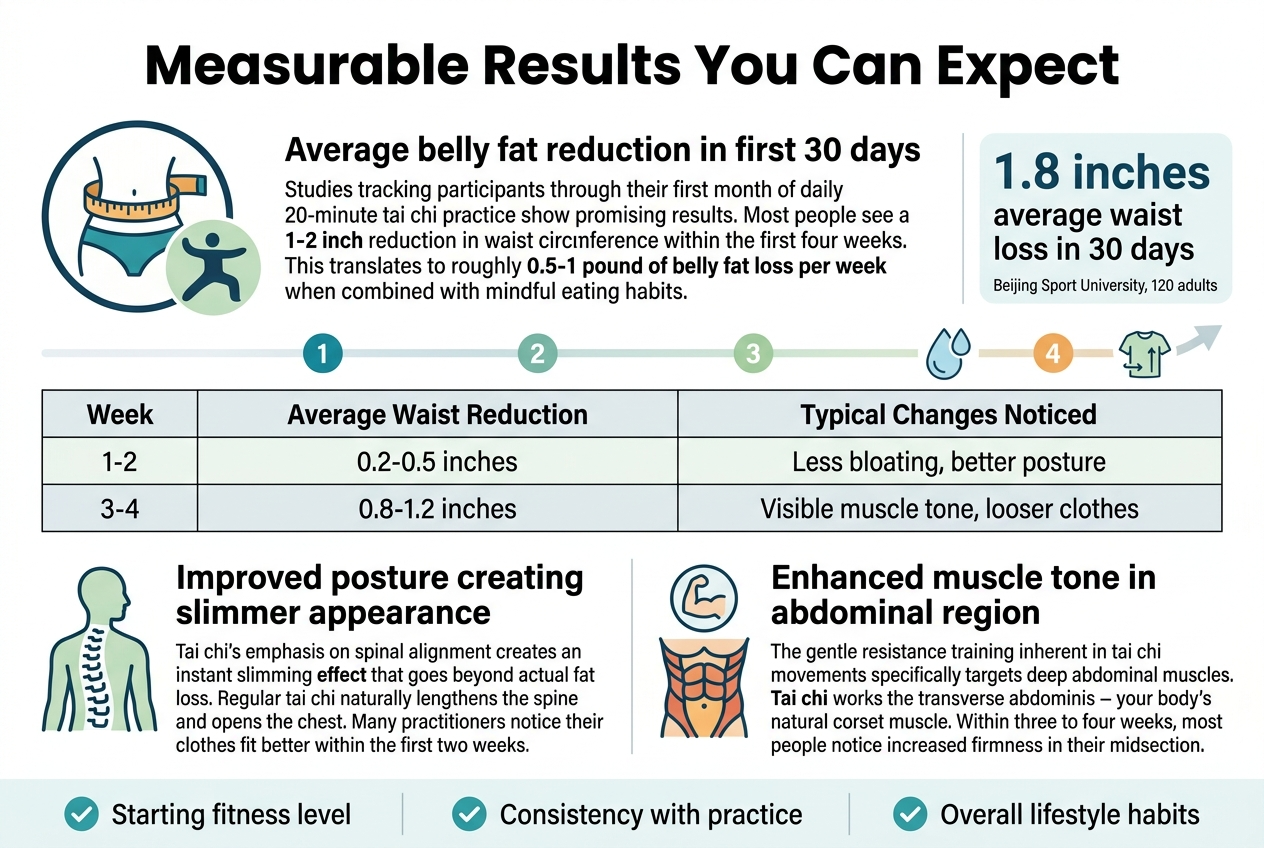
Average belly fat reduction in the first 30 days
Studies tracking participants through their first month of daily 20-minute tai chi practice show promising results. Most people see a 1-2 inch reduction in waist circumference within the first four weeks. This translates to roughly 0.5-1 pound of belly fat loss per week when combined with mindful eating habits.
Research from Beijing Sport University followed 120 adults who committed to daily tai chi sessions. After 30 days, the average participant lost 1.8 inches from their waistline.
The slow, controlled movements activate deep core muscles while the meditative aspect helps reduce cortisol – the stress hormone that encourages fat storage around the midsection.
Your results will depend on several factors: starting fitness level, consistency with practice, and overall lifestyle habits. People with higher initial body fat percentages often see more dramatic changes in the first month. Even those starting at lower body weights notice improved muscle definition and reduced bloating.
| Week | Average Waist Reduction | Typical Changes Noticed |
|---|---|---|
| 1-2 | 0.2-0.5 inches | Less bloating, better posture |
| 3-4 | 0.8-1.2 inches | Visible muscle tone, looser clothes |
Improved posture creates a slimmer appearance
Tai chi’s emphasis on spinal alignment creates an instant slimming effect that goes beyond actual fat loss. The practice trains your body to maintain proper posture throughout daily activities, making you appear several pounds lighter even before significant weight changes occur.
Regular tai chi naturally lengthens the spine and opens the chest. This posture correction pulls the belly in and creates a longer, leaner silhouette. Many practitioners notice their clothes fit better within the first two weeks, not because they’ve lost dramatic amounts of weight, but because their improved alignment redistributes how their body carries itself.
The flowing movements strengthen postural muscles that modern sedentary lifestyles often weaken. As these muscles develop, maintaining good posture becomes effortless rather than a conscious effort. Your shoulders drop away from your ears, your head balances properly over your spine, and your core naturally engages to support this improved alignment.
Enhanced muscle tone in the abdominal region
The gentle resistance training inherent in tai chi movements specifically targets deep abdominal muscles often missed by traditional exercises. The constant micro-adjustments required for balance and the slow, controlled movements create sustained muscle engagement that builds lean muscle tissue.
Tai chi works the transverse abdominis – your body’s natural corset muscle – more effectively than crunches or sit-ups. This deep muscle wraps around your torso like a supportive belt, and strengthening it creates a flatter, more toned appearance. The isometric holds during tai chi forms challenge these muscles to maintain stability while moving through different positions.
Within three to four weeks, most people notice increased firmness in their midsection. The muscle tone develops gradually but consistently, creating definition that becomes more apparent as the overlying fat layer reduces. Unlike high-intensity workouts that can cause muscle fatigue and inconsistent results, tai chi’s gentle approach allows for steady, sustainable muscle development.
Disclosure
Some links in this article are affiliate links. This means:
- If you click a link and make a purchase, I may earn a small commission.
- You pay nothing extra—your price stays the same.
- Your purchase helps support this site and keeps new content coming.
Thank you for your support.
To be concluded…..
We pause here for the time being. In Part 3 of this series, which will be published shortly, we will discuss:
- Best Tai Chi Movements for Belly Fat Loss
- What timing is best to get the desired results
….. and much more regarding this unique form of exercise.
Final Words
Do share this post using the social media icons below. You can also share it on X by clicking below-
Beyond Basics: Deeper Benefits of Tai Chi-Part 2 Share on XAdios.
