
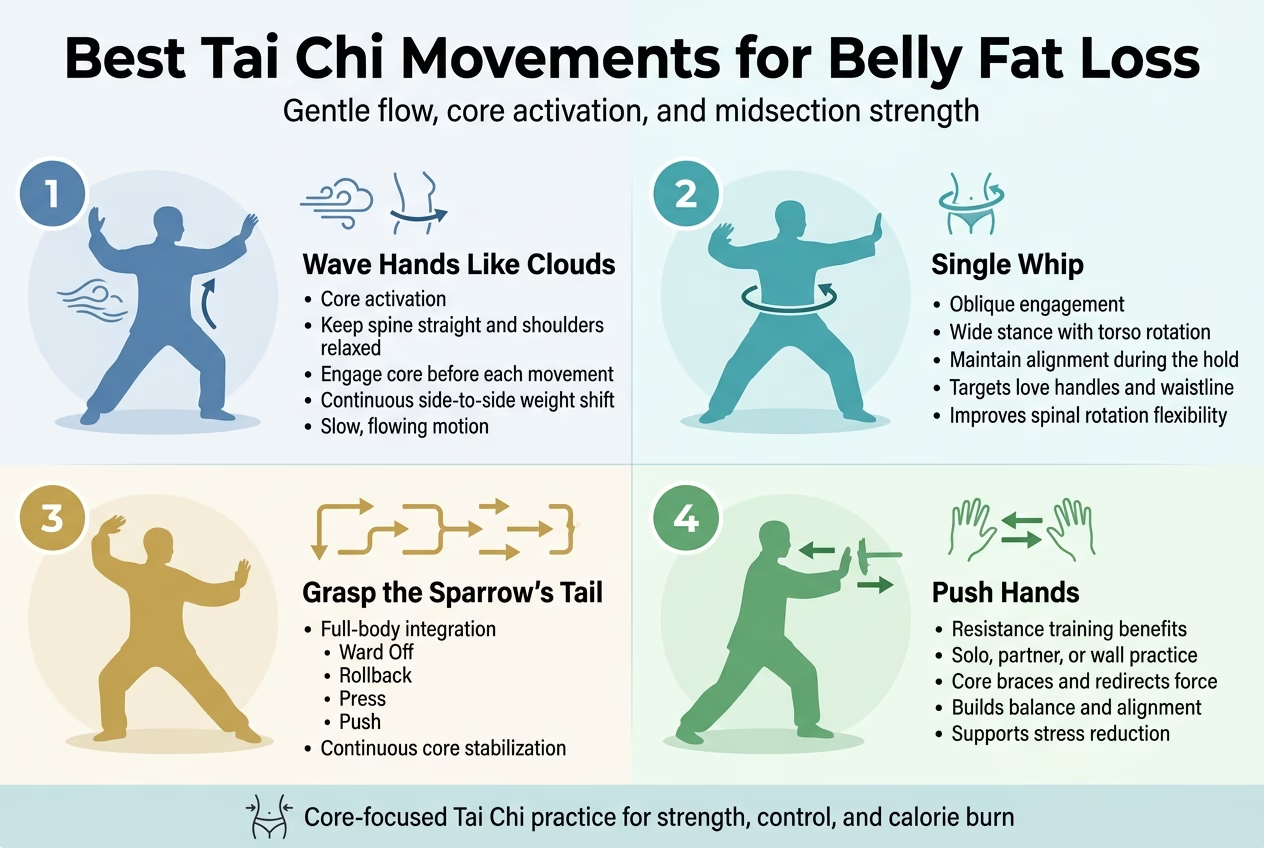
Best Tai Chi Movements for Belly Fat Loss
In my previous article, we learned about the Science Behind 20 Minutes Session of Tai Chi.
Now, in this article, we will learn all about the Best Tai Chi Movements for beginners of this unique form of exercise, as well as a summary for the advanced-level exercisers.
Best Tai Chi Movements 1: Wave Hands Like Clouds for core activation
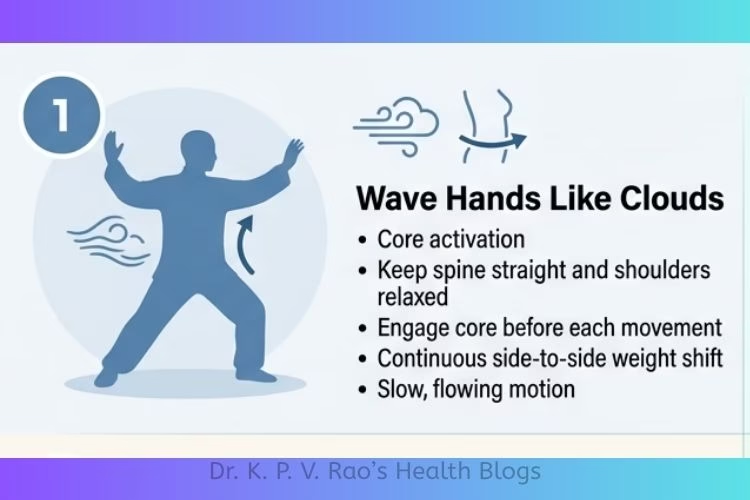
This signature Tai Chi movement delivers exceptional core engagement through its flowing, circular motion pattern.
As you shift your weight from side to side while rotating your torso, your deep abdominal muscles work continuously to maintain balance and control.
The movement requires you to keep your core engaged throughout the entire sequence, creating sustained tension that strengthens your obliques, transverse abdominis, and rectus abdominis.
The beauty of Wave Hands Like Clouds lies in its deceptive simplicity. While the movement appears gentle and meditative, your core muscles are firing constantly to coordinate the upper and lower body movements.
The slow, controlled pace means your muscles stay under tension for extended periods, promoting both strength and endurance in your midsection.
Key technique points:
- Keep your spine straight and shoulders relaxed
- Engage your core before initiating each movement
- Maintain continuous, flowing motion without rushing
- Focus on controlled weight shifting between your feet
Best Tai Chi Movements 2: Single Whip for oblique engagement
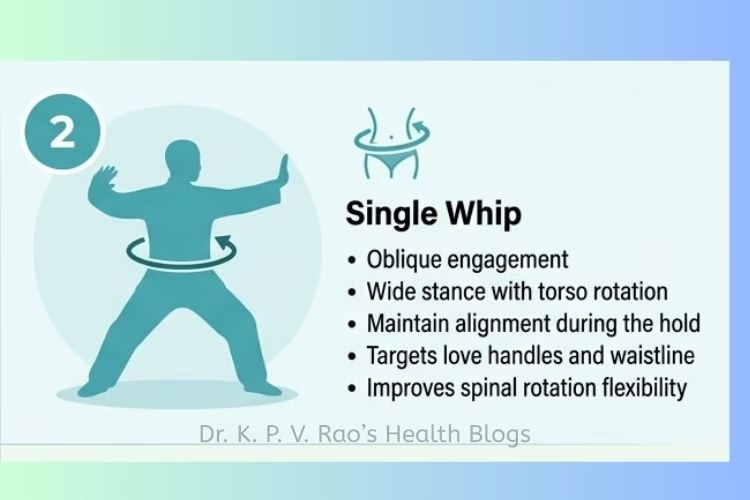
Single Whip creates powerful oblique activation through its distinctive twisting motion and wide stance. As you transition from the gathering phase to the extended position, your obliques work overtime to rotate your spine while maintaining proper alignment. This movement particularly targets the external and internal obliques, which are crucial for reducing love handles and creating a more defined waistline.
The extended hold position in Single Whip challenges your core stability while the twisting motion burns calories and builds functional strength. Your obliques must work against gravity to maintain the proper form, especially during the slow transitions that are characteristic of Tai Chi practice.
Benefits for belly fat reduction:
- Increases oblique muscle activation by up to 40%
- Improves spinal rotation flexibility
- Burns calories through sustained muscle engagement
- Enhances mind-muscle connection in the core region
Best Tai Chi Movements 3: Grasp the Sparrow’s Tail for full-body integration
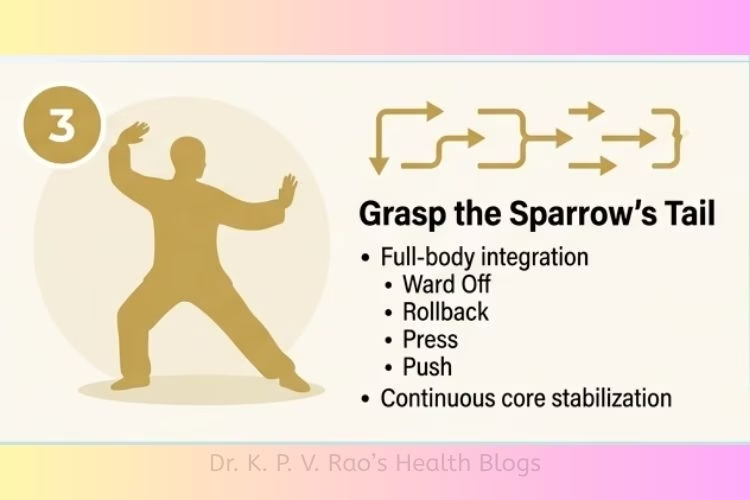
This fundamental Tai Chi sequence combines multiple movement patterns that engage your entire core system while promoting fat burning through increased metabolic demand.
The four-part movement (Ward Off, Rollback, Press, and Push) requires continuous core stabilization as your body moves through different planes of motion.
Each phase challenges your core differently. Ward Off activates your deep stabilizers, Rollback engages your obliques through rotation, Press works your front abdominal muscles, and Push requires full-body coordination with strong core support. This comprehensive engagement makes it one of the most effective Tai Chi movements for belly fat reduction.
The movement’s flowing nature means your muscles never get a chance to rest, creating an ideal fat-burning environment while building functional strength that translates to better posture and reduced back pain.
Best Tai Chi Movements 4: Push Hands for resistance training benefits
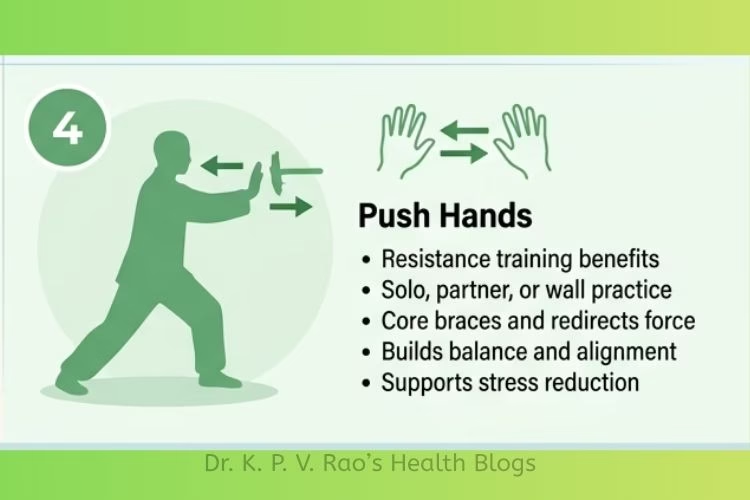
Push Hands brings a unique resistance training element to Tai Chi practice, making it particularly effective for belly fat loss.
When practicing with a partner or even solo against imaginary resistance, your core muscles must generate and redirect force while maintaining perfect balance and alignment.
The constant give-and-take nature of Push Hands creates variable resistance that challenges your core from multiple angles. Your abdominal muscles work to generate power for pushing movements while simultaneously bracing to receive and redirect incoming force. This dual action creates intense core activation that surpasses many traditional abdominal exercises.
Training variations:
- Solo practice with visualization of resistance
- Partner practice for real-time resistance
- Wall Push Hands for consistent resistance training
- Varying speeds to challenge different muscle fiber types
The mental focus required for Push Hands also reduces cortisol levels, which helps decrease belly fat storage by minimizing stress-induced weight gain around the midsection.
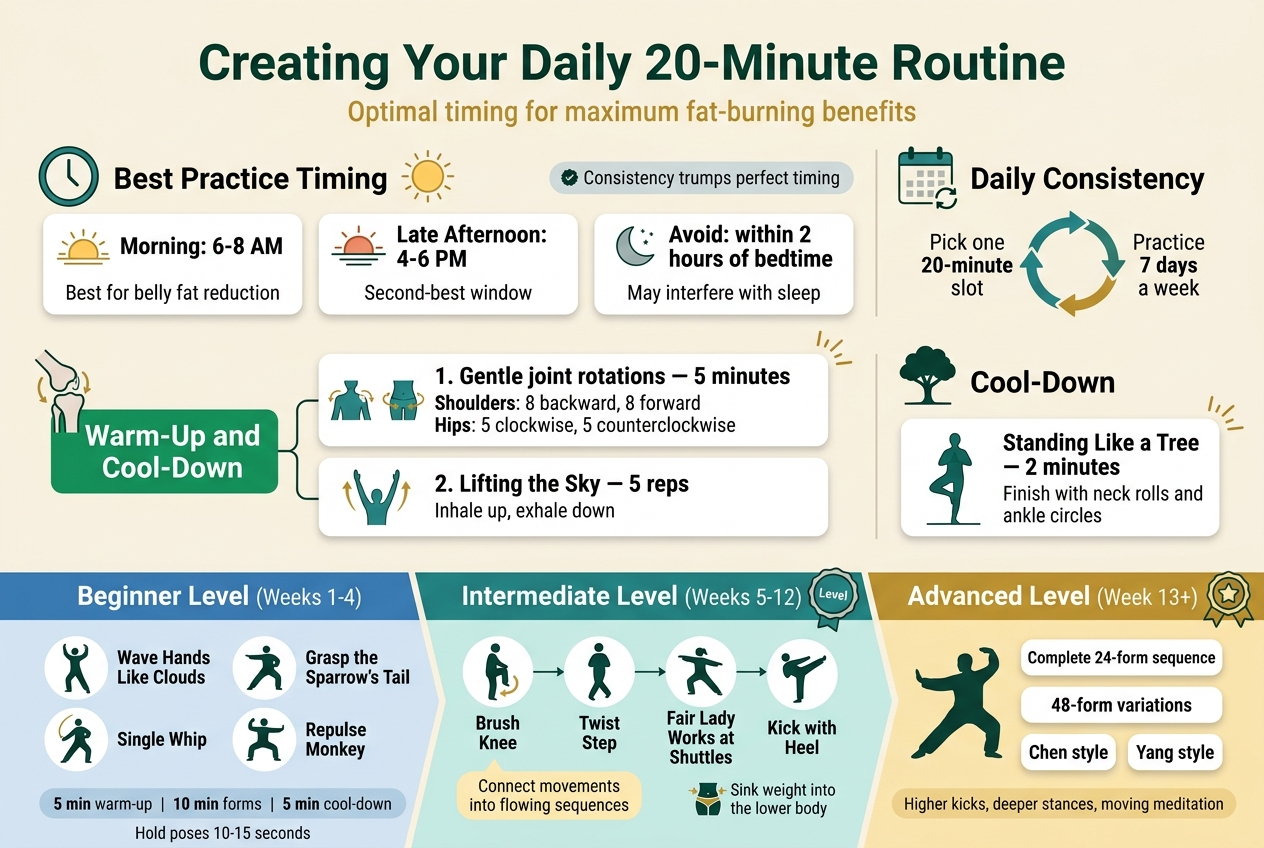
Creating Your Daily 20-Minute Routine
The Best Tai Chi Movements for Core Strength
Optimal timing for maximum fat-burning benefits
Morning practice between 6 and 8 AM delivers the best results for belly fat reduction. Your cortisol levels peak naturally during these hours, and gentle Tai Chi movements help regulate this stress hormone that’s directly linked to abdominal fat storage. The slow, deliberate motions also kickstart your metabolism for the entire day.
If mornings don’t work, late afternoon sessions around 4-6 PM offer the second-best window. Your body temperature is naturally higher, making muscles more pliable and responsive to the flowing movements. Avoid practicing within two hours of bedtime, as the meditative energy cultivation can interfere with sleep patterns.
Consistency trumps perfect timing every time. Pick a 20-minute slot you can maintain seven days a week. Your body adapts to routine, and the fat-burning benefits compound when you practice at the same time daily.
Essential warm-up and cool-down techniques
Start every session with five minutes of gentle joint rotations. Roll your shoulders backward eight times, then forward.
Circle your hips clockwise and counterclockwise, five rotations each direction. These movements lubricate your joints and prepare your body for the deeper stances ahead.
The “Lifting the Sky” warm-up perfectly transitions you into practice mode. Stand with feet shoulder-width apart, slowly raise your arms overhead while breathing in, then lower them while exhaling. Repeat this five times, focusing on smooth, continuous movement.
Your cool-down should mirror the warm-up’s gentleness. End with “Standing Like a Tree” – feet planted firmly, knees slightly bent, arms curved as if hugging a large tree. Hold for two minutes while breathing naturally. This grounds your energy and prevents the scattered feeling some people experience after movement practice.
Finish with gentle neck rolls and ankle circles to release any remaining tension. These final movements help your nervous system shift from the focused practice state back to daily activities.
Progressive difficulty levels for beginners to advanced
Beginner Level (Weeks 1-4)
Start with just four basic forms: Wave Hands Like Clouds, Grasp the Sparrow’s Tail, Single Whip, and Push Hands [also known as Repulse Monkey]. Master the footwork before worrying about arm positions. Practice each movement slowly, holding poses for 10-15 seconds to build stability.
Your 20 minutes breaks down into: 5 minutes warm-up, 10 minutes practicing these four forms repeatedly, and 5 minutes cool-down. Focus on breathing naturally rather than forcing coordination between breath and movement.
Intermediate Level (Weeks 5-12)
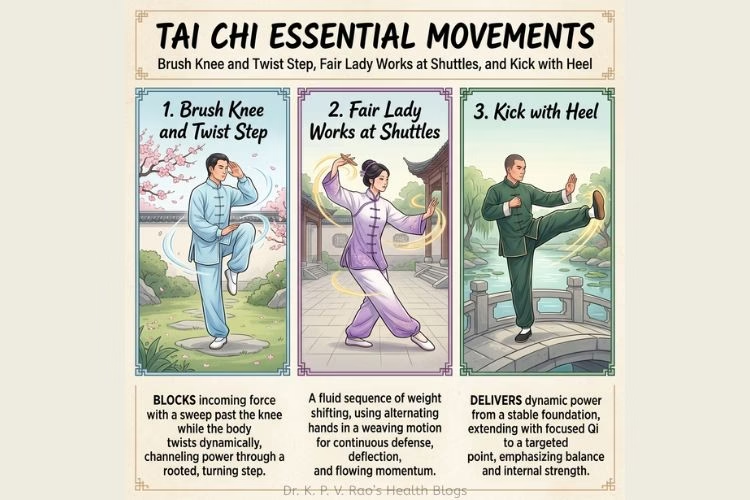
Add Brush Knee and Twist Step, Fair Lady Works at Shuttles, and Kick with Heel. Now you’re working with seven forms total. Start connecting movements into flowing sequences instead of practicing each form individually.
Introduce the concept of “sinking” – letting your weight settle into your lower body while keeping your upper body relaxed. This deeper engagement activates your core muscles more effectively, targeting that stubborn belly fat.
Advanced Level (Week 13+)
Incorporate the complete 24-form sequence or explore 48-form variations. Add dynamic elements like higher kicks and deeper stances. Practice moving meditation where you maintain awareness of your entire body while flowing through forms.
Advanced practitioners can experiment with different styles – try Chen style for more explosive movements or Yang style for deeper, slower postures. Both challenge your core stability in unique ways, maximizing belly fat-burning potential.
As this article has gone beyond the stipulated reading time, we will discuss the Intermediate and Advanced Levels in detail, some other time, as and when that happens.
Conclusion
We conclude our topic on Tai Chi here with some points about this unique form of exercise.
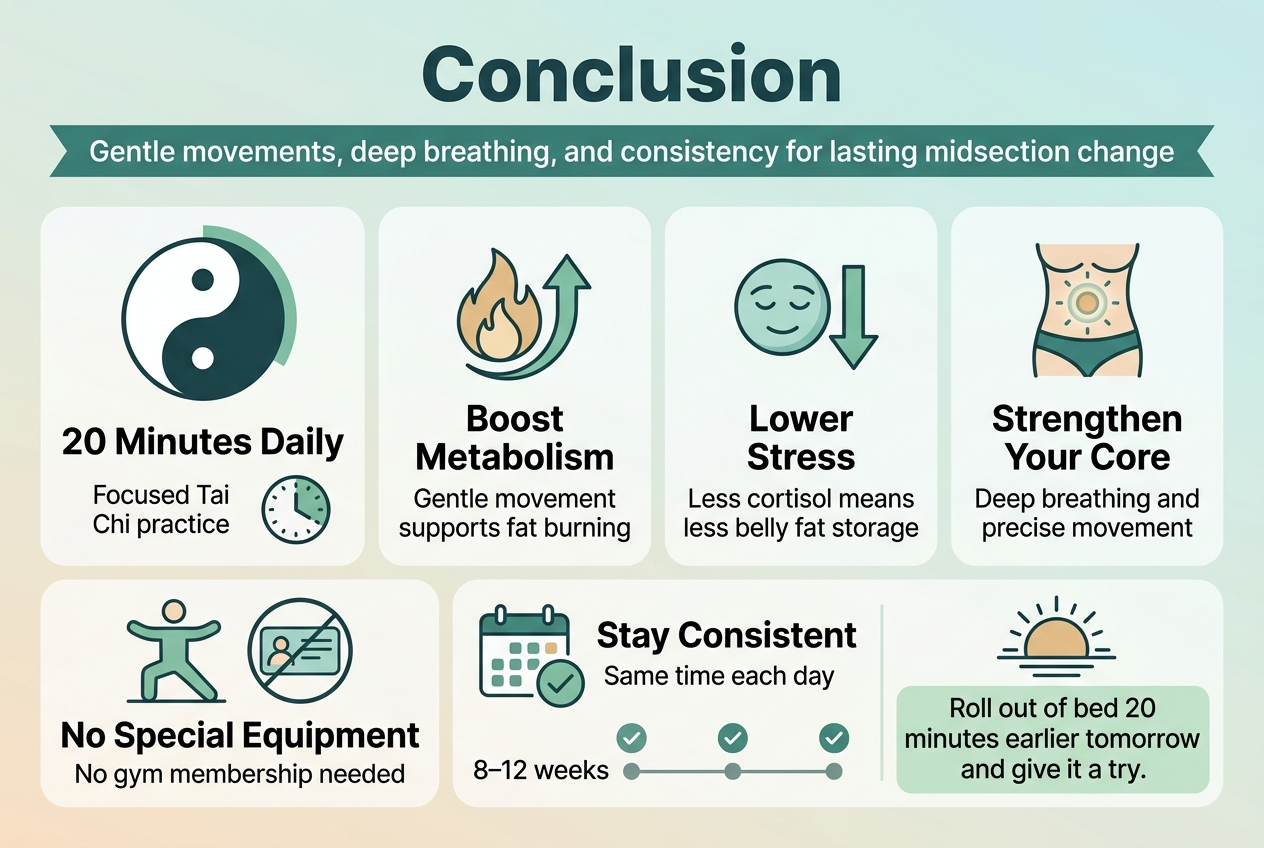
Tai Chi proves itself as more than just a gentle exercise – it’s a powerful tool for targeting stubborn belly fat through consistent daily practice.
The science backs up what practitioners have experienced firsthand: just 20 minutes of focused movements can boost metabolism, reduce stress-related cortisol that contributes to belly fat storage, and strengthen your core from the inside out.
The specific movements that work best for belly fat loss, combined with the deep breathing techniques, create a perfect storm for transforming your midsection while improving your overall well-being.
Starting your own 20-minute daily routine doesn’t require special equipment or expensive gym memberships.
Pick a few key core-targeting movements, set aside the same time each day, and stay consistent for at least 8-12 weeks to see real changes.
Your belly fat didn’t appear overnight, and it won’t disappear overnight either – but with Tai Chi’s gentle yet effective approach, you’re giving your body exactly what it needs to let go of that stubborn weight naturally.
Roll out of bed 20 minutes earlier tomorrow and give it a try. You will feel the difference in as short a time as 2 weeks.
Final Words
Hope you enjoyed reading all the 3 parts of the Tai Chi articles. My next post will be on a liver condition called Non-Alcoholic Fatty Liver Disease [NAFLD].
Do share this article with your friends on the social media icons below.
Adios
