
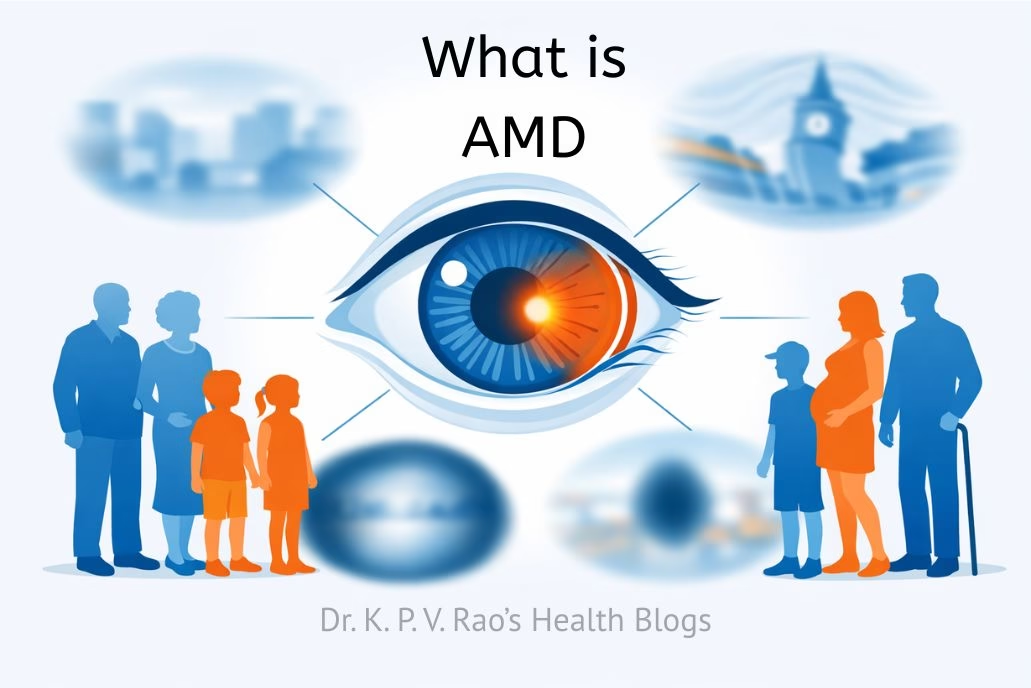
What you need to know about Age-related Macular Degeneration [AMD] of Your Eyes
You squint a little harder at the menu. You bump up the brightness on your phone. You tell yourself your reading glasses just need a new prescription.
Most people in their 50s brush off small vision changes without a second thought. But some of those changes aren’t just aging. They can be early signs of age-related macular degeneration, or AMD, one of the leading causes of vision loss in adults over 50.
Disclaimer
The information in this article is intended for reference purposes only, is informative in nature, and is not intended as individual advice. I advise consultation with a qualified health professional or your family physician to assess your individual health concerns.
What exactly is AMD, or Age-related Macular Degeneration?
Here’s an infographic that tells you in short what exactly AMD is and its different types-
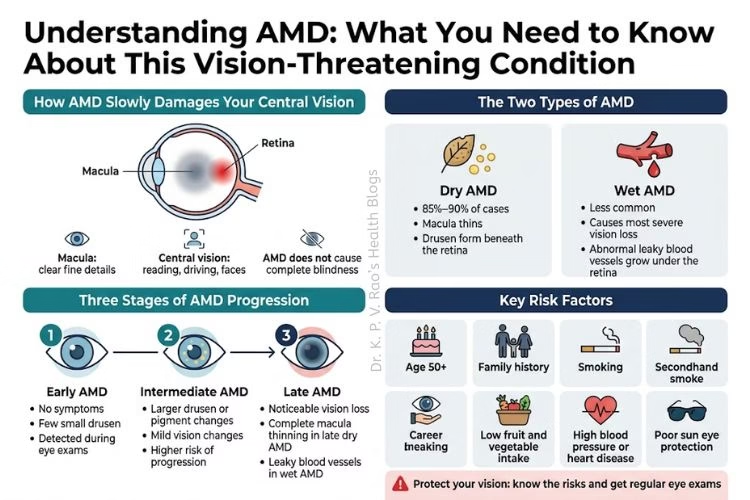
We will discuss this condition in detail as we go ahead in this article.
In the meantime, here’s an example to let you know how a patient of AMD presents to a doctor.
One of my patients, in his early 60s, came with symptoms of blurred and partial vision in his left eye. Apart from this, he has a history of smoking, high cholesterol levels, and hypertension. I first ruled out cataract of the eyes, which also has similar symptoms.
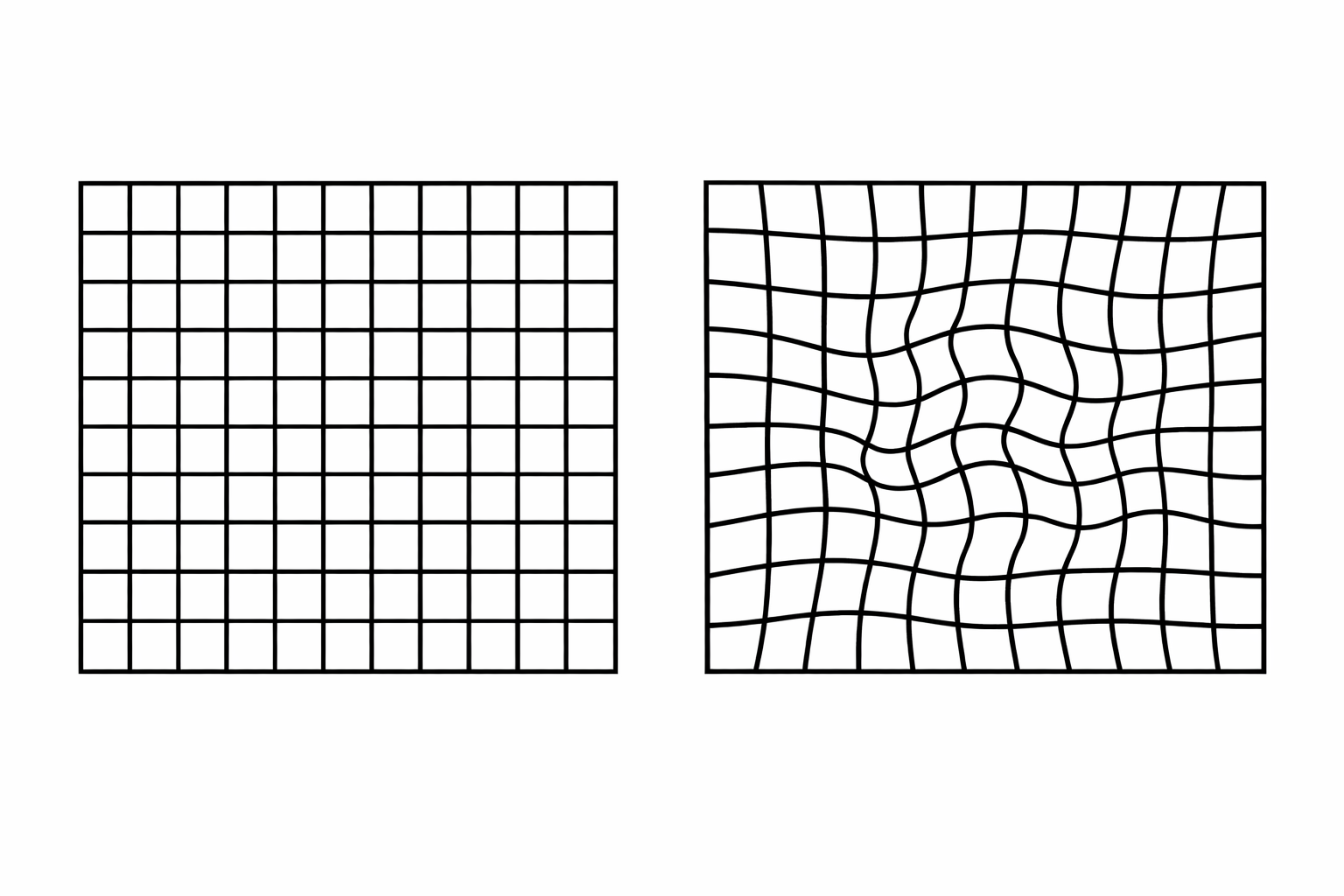
I then showed him the Amsler Grid [discussed below] and asked what he could see. He could not visualize one side of the grid. I could make out why he was getting worried.
I immediately referred him to an ophthalmic surgeon for fundoscopy and retinoscopy, which confirmed what I was suspecting- AMD. This patient is currently undergoing treatment for the same; his eyesight has improved, and the progression of AMD has been halted [or slowed down].
Why should we worry about this condition?
The tricky thing about early AMD is that it moves slowly. It doesn’t announce itself with dramatic symptoms.
Instead, it sneaks in with slightly blurry text, colors that seem a little duller, or lines that look just a bit off. And because it happens gradually, most people don’t realize anything is wrong until the disease has progressed further than it needed to.
This post will walk you through the specific visual symptoms to watch for in your 50s, from subtle central blurriness to changes in how you see color.
You’ll also learn about:-
- a simple at-home test you can do weekly,
- the risk factors that make AMD more likely,
- and when it’s time to get to an eye doctor fast.
Recognizing the Visual Symptoms of Early Age-Related Macular Degeneration
Your vision in your 50s should still feel crisp and reliable for most daily tasks. When early AMD starts developing, though, something feels off.
Have a look at the cross-section of the image of the eye below. The left one is how your normal eye looks as seen on fundoscopy. The right one is showing changes due to AMD.
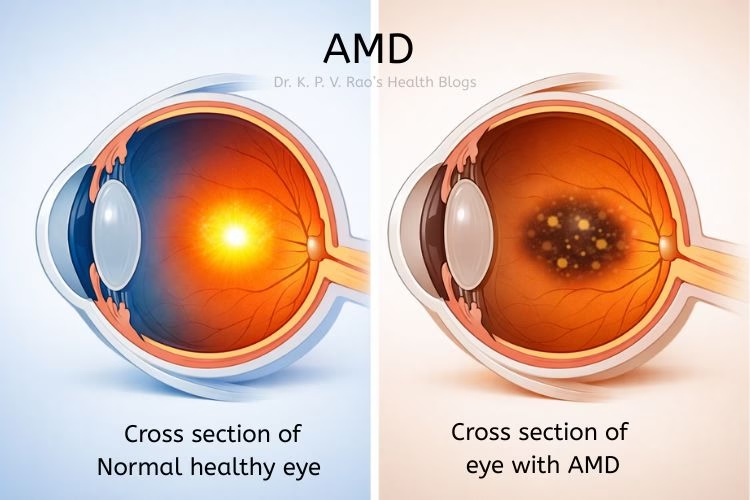
The second image above shows a slightly darkened or spotted macula area, that shows the contrast between healthy and affected vision.
The changes happen so gradually that you might dismiss them or assume you just need a high-power glasses prescription.
Blurred or Fuzzy Central Vision
Reading the newspaper becomes harder even when you’re sitting in bright sunlight. The words don’t look quite as sharp as they used to. You hold the book farther away, then closer, trying to find that sweet spot where the text looks clear again, but nothing seems to help.
This blurriness targets the center of what you’re looking at.
Age-related macular degeneration affects the macula, the small central part of your retina responsible for sharp, detailed vision.”
When you try to recognize someone’s face across the room, their features look fuzzy even though you can see the outline of their body perfectly.
Letters might appear to run together on the page, despite wearing your reading glasses. The peripheral vision stays clear, which is why many people don’t immediately realize something is wrong.
You can still navigate rooms and avoid obstacles, but the fine details in your central field of view become increasingly difficult to make out.
Distorted Vision and Wavy Lines (Metamorphopsia)
Straight lines start playing tricks on you. The door frame looks bent. Window blinds appear wavy. When you’re reading, the lines of text curve or buckle instead of running straight across the page.
This distortion, called metamorphopsia, represents one of the most distinctive early warning signs of AMD, particularly the wet form [have a look at the first image].
Grid patterns become especially revealing. Bathroom tiles that should form perfect squares might look warped or have sections that seem to disappear.
Graph paper shows curves where straight lines should be. The Amsler grid test (see below) takes advantage of this symptom, using a simple grid pattern to help you detect these distortions at home.
If you notice this type of visual distortion, you need to see an eye doctor right away. Wet AMD can progress rapidly, but early treatment can prevent significant vision loss.
Dark or Empty Spots in Central Vision (Scotomas)
A gray or blank patch appears right where you’re trying to look. You’re reading a book, and suddenly there’s a blurry spot obscuring some of the words.
You shift your eyes slightly to read around it. When looking at someone’s face, their nose might disappear into a shadowy area.
These blind spots, called scotomas, differ completely from floaters.
Floaters drift around when you move your eyes. Scotomas stay put in your central vision, always blocking the same part of your view. They typically start small, maybe just enough to obscure a few letters or a small portion of an image.
Advanced dry AMD often creates well-defined central blind spots that expand over time, making reading, driving, and recognizing faces increasingly difficult.”
Difficulty Adapting to Low Light Conditions
The restaurant lights seem dimmer than they used to be. You find yourself turning on extra lamps when you never needed them before. Reading a menu in a moderately lit restaurant becomes impossible without pulling out your phone’s flashlight.
Your eyes take much longer to adjust when you walk from bright sunlight into a building. Rooms that other people find adequately lit look darker to you. Early AMD detection often involves noticing these subtle changes in light sensitivity. Driving at dusk becomes uncomfortable because your contrast sensitivity has decreased. You can’t quite make out where the road ends and the shoulder begins. Colors look washed out in dim lighting, making it hard to distinguish between different items on your plate at dinner.
Changes in Color Perception and Contrast Sensitivity
Colors don’t pop like they once did. That vibrant red shirt looks more muted. Yellow flowers in your garden seem less brilliant. You might not notice this gradual shift until you’re trying to match clothing or select paint colors and realize everything looks duller than expected.
Distinguishing between similar shades becomes challenging. Navy blue and black blend together. Beige and light gray look nearly identical. When you place light-colored food on a white plate, the edges seem to disappear. This reduced contrast sensitivity affects everyday activities more than you might expect. Research shows that color perception changes often go completely unnoticed in early AMD because the shift happens so slowly and because we rarely have objective comparisons. You adapt without realizing your color vision has changed until someone points out that the colors you’re describing don’t match what they’re seeing.
Self-Assessment Tools and When to Seek Professional Eye Care for AMD
Using the Amsler Grid for At-Home AMD Monitoring
Think of the Amsler grid as your personal early warning system for age-related macular degeneration.
This simple tool looks like a piece of graph paper with a dot in the middle, but it can catch vision changes before you even realize something’s wrong.
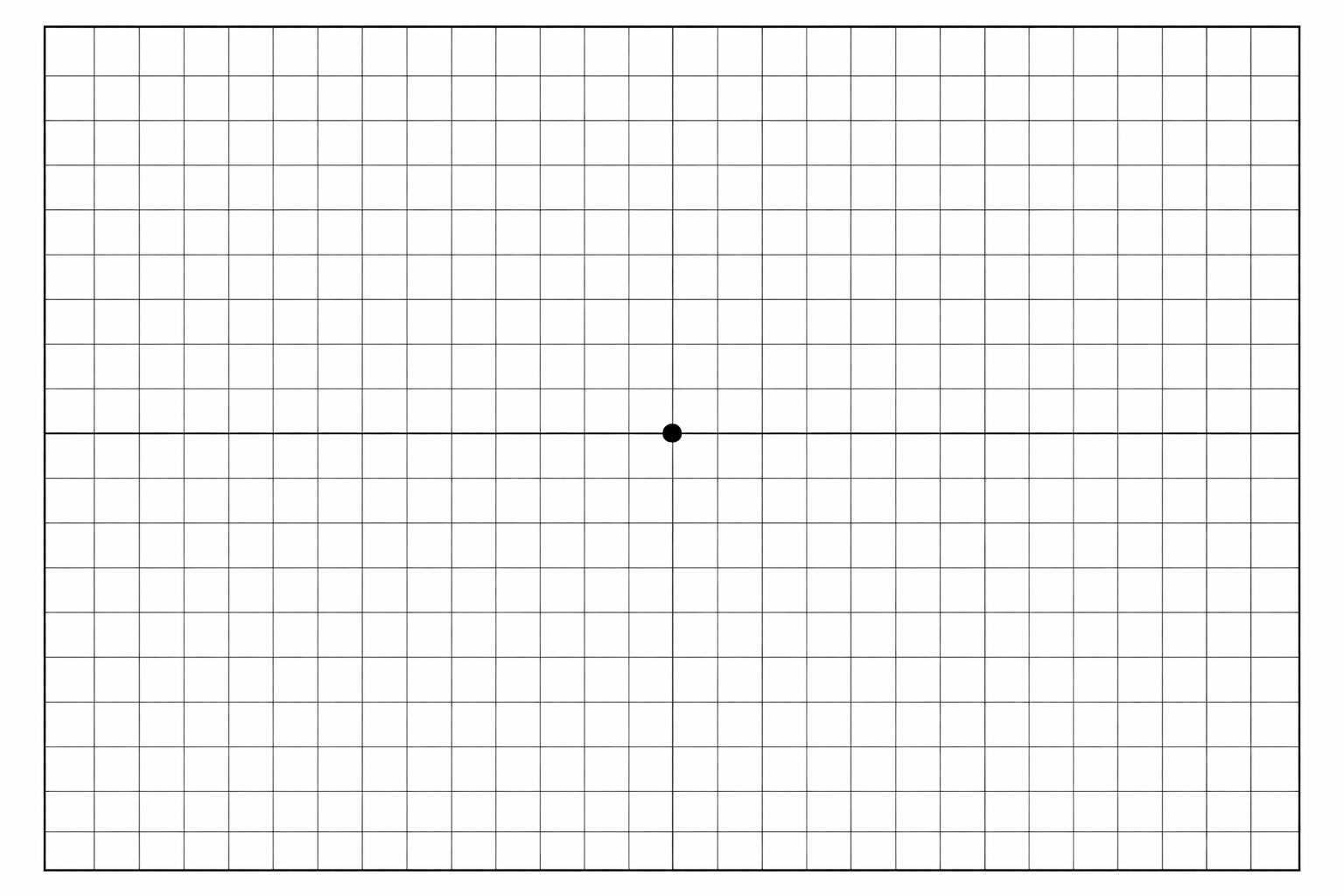
Here’s how to use it properly. Cover one eye with your hand or an eye patch while wearing your regular reading glasses. Hold the grid about 12 to 15 inches from your face, roughly the same distance you’d hold a book or your phone. Focus on the center dot and keep your eye fixed there. Don’t let your gaze wander.
While staring at that center point, pay attention to what’s happening in your peripheral awareness and analyze this way-
- Do any of the straight lines appear wavy or bent?
- Are there sections of the grid that look blurry, darker, or completely missing?
- Do the perfect squares seem distorted or irregular?
These changes can be subtle, so take your time with each eye. You should test both eyes separately at least once a week.
Pick the same time and place where you have consistent good lighting. Morning light works well for most people.
Keep a written record of your results or use the same grid each time so you can compare.
If you notice any change at all from your previous tests, contact your ophthalmologist that same day. Speed matters with AMD, especially the wet form.”
Risk Factors That Increase Your AMD Likelihood in Your 50s
Your genes play a bigger role than you might think. Family history cranks up your risk significantly, with genetics contributing to up to 70% of AMD cases. If your parents or siblings developed age-related macular degeneration, you’re facing higher odds yourself.
Smoking is the biggest controllable risk factor you have. It doesn’t just slightly increase your chances.
Smoking doubles or even triples your likelihood of developing AMD and makes the disease progress faster once it starts. Every cigarette damages the delicate blood vessels in your retina.”
Your heart health directly affects your eye health. Cardiovascular disease, high blood pressure, and elevated cholesterol levels all link to increased AMD risk. The same blood vessels that feed your heart also nourish your retinas, so what’s bad for one is bad for the other too.
Race matters too, though we don’t fully understand why.
Caucasians face higher rates of AMD compared to other ethnic groups, and people with lighter colored eyes show greater prevalence than those with darker eyes.”
Critical Warning Signs That Require Immediate Medical Attention
Some symptoms can’t wait for your next scheduled appointment, like the one you see below- wavy lines seen while viewing a straight line on a page in a book.
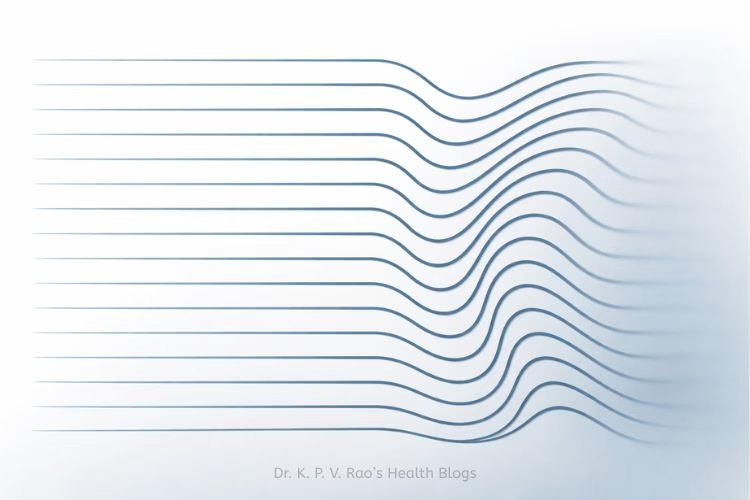
Drop everything and call your eye doctor immediately if straight lines suddenly start appearing wavy or bent. This visual distortion often signals wet AMD, which requires urgent treatment to prevent permanent vision loss.
Rapid changes demand rapid action. If your vision deteriorates noticeably within days or weeks rather than months, that’s an emergency. The same goes for a central blind spot that suddenly grows larger or becomes more pronounced.
Strange visual hallucinations can occur when severe vision loss from AMD affects your brain’s visual processing. This condition, called Charles Bonnet syndrome, means seeing patterns, faces, or objects that aren’t there. While not dangerous itself, it indicates significant AMD progression that needs immediate attention.
Any change in your Amsler grid results compared to your baseline deserves a same-day call to your ophthalmologist. Even small shifts in how the grid appears could mean your AMD is advancing.
Recommended Eye Examination Schedule for AMD Detection
Your 50s are the perfect decade to get serious about comprehensive eye exams.
Everyone in this age group should schedule dilated eye examinations every one to two years, even if their vision seems perfectly fine.”
Many early AMD changes happen without symptoms you can feel.
Conclusion
Have risk factors? Bump that schedule to annual exams starting at age 50. Your family history, smoking status, or cardiovascular issues mean you can’t afford to wait two years between checkups.
A thorough exam should include more than just reading an eye chart.
Ask about optical coherence tomography (OCT) and fundus photography. These imaging technologies can spot early AMD changes in your macula that aren’t visible during a regular examination. They create detailed maps of your retinal layers and capture baseline images.
Those baseline images from your 50s become incredibly valuable as you age. They give your eye doctor comparison points to detect even tiny changes in future exams. Think of them as before pictures that help identify when something shifts, even slightly, in your macular health.
Related post:- What your eyes tell about your age
Final Words
Hope you have found this article useful. If yes, bookmark this website for learning more about many such health issues.
Please keep a lookout for my next article that will be on how to reduce belly fat through ancient martial arts exercises.
Affiliate Disclosure
Some links in this article are affiliate links. This means:
- If you click a link and make a purchase, I may earn a small commission.
- You pay nothing extra—your price stays the same.
- Your purchase helps support this site and keeps new content coming.
Share this article
Please share this article by clicking on the Social Media buttons below. Alternatively, you can click here [if you have an X account]-
How To Spot Early AMD Warning Signs In Your 50s Share on X