
A small decision at 50 that can protect decades of your future health.
Written and reviewed by Dr. K. P. V. Rao, MBBS, General Medical Practitioner from Mumbai, after thorough research
A colonoscopy is not just a diagnostic tool; it is a powerful preventive procedure. In fact, it remains the gold standard for preventing colorectal cancer.
Medical Disclaimer:
The information on this blog is for educational and informational purposes only and is not a substitute for professional medical advice, diagnosis, or treatment. Always seek the advice of your physician or other qualified healthcare provider with any questions you may have regarding a medical condition or procedure.
As a physician, I often talk to patients who feel anxious or hesitant when I recommend a colonoscopy. It is completely natural to feel uneasy about an invasive screening procedure. However, understanding the clinical reality of a colonoscopy usually turns that anxiety into confidence.
In this comprehensive guide, we will discuss exactly why this procedure is so critical, what happens during the preparation, and what to expect on the day of your appointment.
If you have a look at the table below, you’ll understand why I would recommend colonoscopy to any person having a lower intestinal problem and is worried about it-
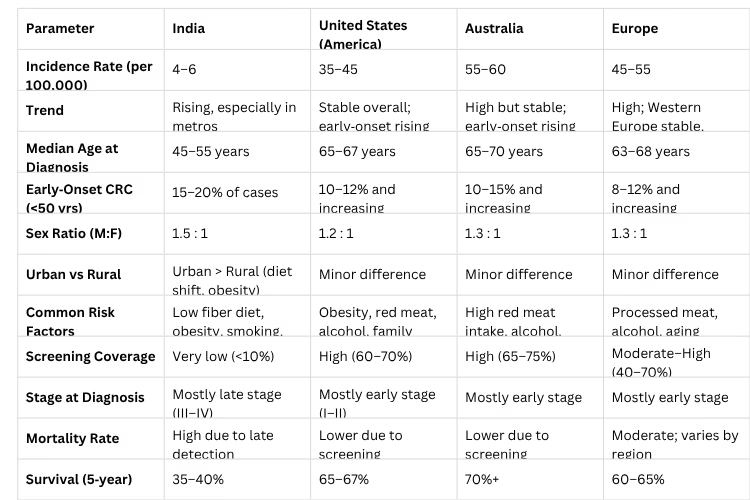
cancer occurring in different countries in the world and it’s impact.
What is a Colonoscopy and Why is it Necessary?
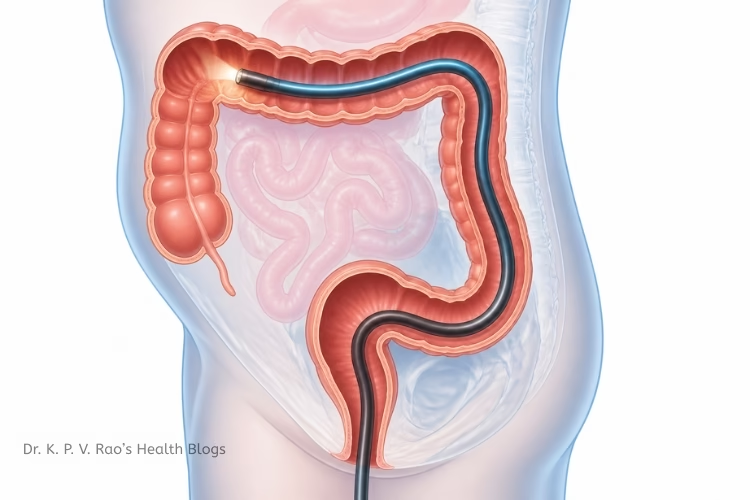
A colonoscopy is a medical procedure where a gastroenterologist or trained specialist uses a thin, flexible tube equipped with a light and a tiny video camera (a colonoscope) to view the entire inside lining of your large intestine (colon) and rectum.
Doctors recommend this colonoscopy for two primary reasons:
- Investigating Symptoms: If you experience unexplained abdominal pain, chronic diarrhea, constipation, or rectal bleeding, a colonoscopy helps us pinpoint the root cause.
- Cancer Screening and Prevention: Colorectal cancer almost always begins as small, benign clumps of cells called polyps. During a colonoscopy, your doctor can identify and remove these polyps before they ever have a chance to turn into cancer.
The Most Important Step: Colonoscopy Preparation
When patients tell me, “The procedure was a breeze, but the prep was hard,” they are highlighting a universal medical truth. The success of your colonoscopy relies almost entirely on how clean your colon is.
If the colon is not completely clear of waste, the camera cannot see the tissue clearly. This increases the risk of missing small polyps and may force you to repeat the entire process.
Rules for a Successful Colonoscopy Prep:
- Low-Fiber Diet: A few days before the procedure, you will switch to low-fiber foods. Avoid
- nuts,
- seeds,
- whole grains,
- raw vegetables, and
- corn.
- Clear Liquid Diet: The day before your procedure, you must stop eating solid foods. You will consume only clear liquids, such as
- clear broth,
- black coffee,
- tea, and apple juice
- avoid any liquids with red, blue, or purple coloring, as these can mimic blood in the colon.
- The Laxative Regimen: Your doctor will prescribe a strong laxative solution to flush out your system. It is vital to split or take this dose exactly as prescribed, staying close to a restroom throughout the evening.
The Procedure-How is it done
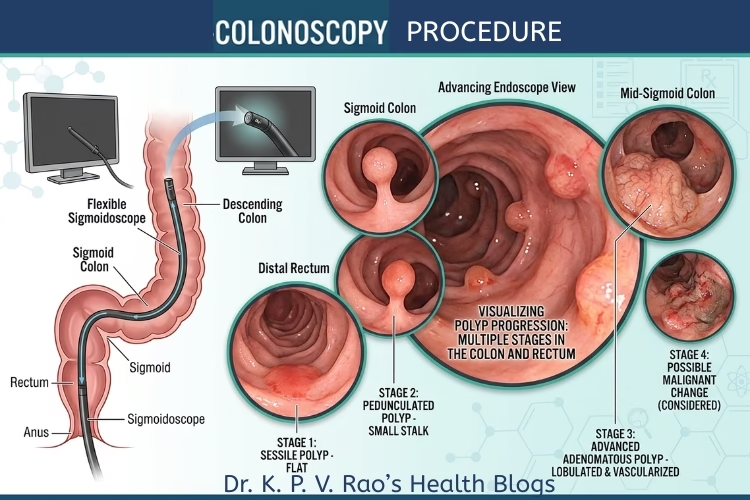
Think of a virtual colonoscopy or flexible sigmoidoscopy [sigmoid colon is the S-shaped last part of the colon] as your doctor’s way of taking a complete visual tour of your colon to spot trouble before it starts.
The procedure itself is straightforward. You’ll be comfortably sedated, so you won’t feel a thing while your doctor works.
A gastroenterologist (a specialist in digestive health) carefully guides the instrument-the colonoscope- in the colon through the anus, rectum and the sigmoid colon.
This flexible tube is equipped with a tiny camera that sends live video to a monitor, giving your doctor a clear, detailed view of your colon’s interior lining.
The scope gently expands the colon walls, making it easier to examine every fold and surface.
Your doctor looks for anything unusual, especially polyps, which are small growths that can turn into cancer over time. Here’s where colonoscopy truly shines compared to other screening methods.
If your doctor spots a polyp during the exam, they can remove it right then and there using a small tool threaded through the colonoscope. You won’t feel the removal.
This ability to find and eliminate potential threats in a single procedure makes colonoscopy uniquely powerful.”
Average Cost of Colonoscopy
Cost shouldn’t stop you from getting screened. Most insurance plans, including Medicare, cover colonoscopy screening tests when they’re medically appropriate. Talk to your insurance provider about your specific coverage.
The average cost of colonoscopy in 3 major countries in their currencies is shown below-
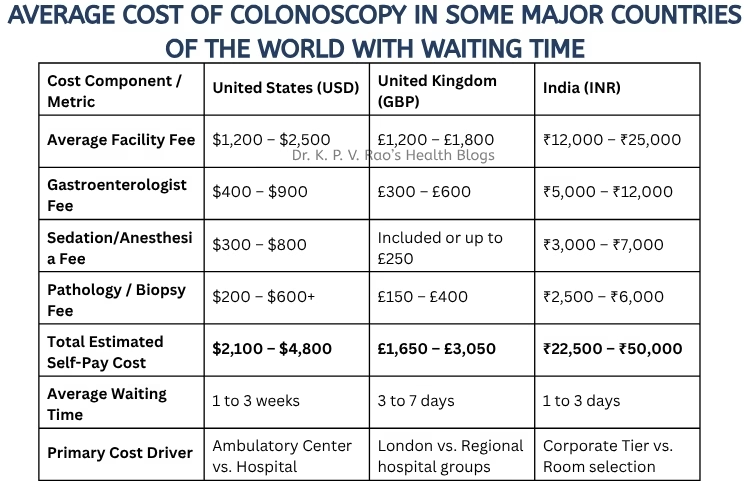
You have options when it comes to colorectal cancer screening. Stool tests and other methods exist, and your primary care provider can walk you through them. That said, colonoscopy remains the gold standard for both finding and preventing cancer. It’s the most comprehensive approach available.
Early detection saves lives. This isn’t just a slogan or scare tactic. It’s medical fact backed by decades of research and millions of procedures.
Taking control of your health means scheduling that screening, even when it feels easier to put it off. Your future self will thank you.”
Patient FAQ: What Happens During and After the Procedure?
Q: Does a colonoscopy hurt?
No, you should not feel pain. The vast majority of colonoscopies are performed under conscious sedation or twilight anesthesia. You will be deeply relaxed, comfortable, and likely sleep right through the 30-to-45-minute procedure without remembering any of it.
Q: What happens if the doctor finds a polyp?
They will remove it immediately. If a polyp is detected, the doctor passes a small wire loop through the colonoscope to snip it out. This process, called a polypectomy, is completely painless. The tissue is then sent to a pathology lab to check if it is benign or precancerous.
Q: What is the recovery process like for Colonoscopy?
- Immediate Recovery: You will spend about 30 to 60 minutes in a recovery room while the sedative wears off.
- Going Home: You must have a family member or friend drive you home. The sedation impairs your judgment and reflexes, making it unsafe to drive or return to work until the next day.
- Diet: You can typically resume your normal eating habits immediately after leaving the clinic or hospital, starting with a light meal to wake up your digestive system.
- Minor Side Effects: You may experience mild bloating or gas for a few hours as your body expels the air introduced into the colon during the exam. Walking helps relieve this discomfort quickly.
Final Thoughts
If you are 45 or older, or if you have a family history of colorectal cancer, scheduling a colonoscopy is one of the most proactive choices you can make for your long-term wellness. Colorectal cancer is highly preventable when polyps are caught early.
Do not let fear or embarrassment delay a routine test that can quite literally save your life. Speak with your primary care physician to determine the right screening timeline for your specific health history.
Now, if you are living in Vashi or anywhere in Navi Mumbai, your doctor may recommend you any one of these hospitals or a gastroenterologist mentioned below, if you need to undergo colonoscopy.
Top Facilities and Specialists for Colonoscopy in Vashi
- Fortis Hiranandani Hospital (Sector 10A, Vashi)
- Top Gastroenterologists: Dr. Ronak Rajesh Tate, Dr. Satish Kulkarni
- MGM New Bombay Hospital (Sector 3, Vashi)
- Top Gastroenterologists: Dr. Harshad Khairnar
- Neoalta Speciality Clinic (Sector 17, Vashi)
- Top Gastroenterologists & Surgeons: Dr. Deepak Kumar Gupta, Dr. Nitish Jhawar (Colorectal/Surgical GI)
- Dr. Vasudev’s GI & Endoscopy Center (Sector 17, Vashi)
- Top Gastroenterologists: Dr. C. Vasudev
- NMMC Hospital (Sector 10A, Vashi)
- Top Gastroenterology / Endoscopy Staff: General and GI Endoscopy unit staff on-site.
Hope you found this information useful. Take care and wish you good health.
Adios.
