
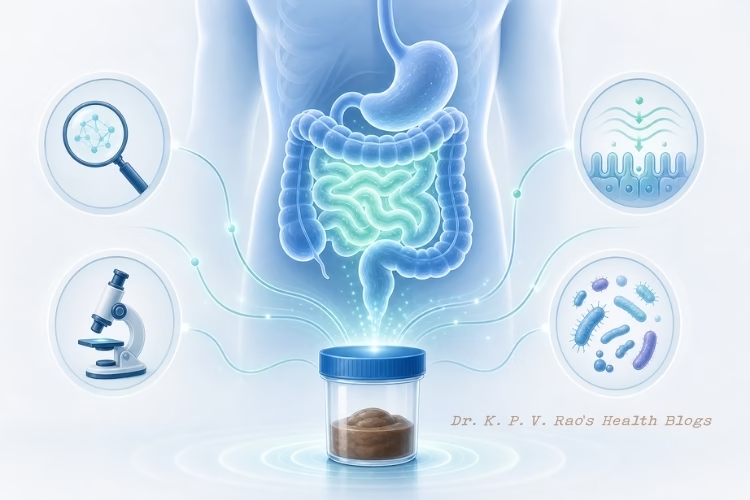
Learn why your doctor has advised you a stool examination test
Nobody really wants to talk about poop. It’s awkward, it’s uncomfortable, and most people would rather skip the topic entirely. But here’s the thing. A simple stool sample can tell your doctor more about your health than you’d ever expect.
We’re talking early signs of cancer, hidden infections, problems with how your body absorbs nutrients, and the overall state of your gut.
Stool examiation/ tests are one of the most underrated tools in medicine. They’re non-invasive, relatively easy to do, and they catch serious problems before symptoms even show up.
Many people delay stool tests or don’t understand why doctors recommend them. This lack of awareness can lead to missed diagnoses and delayed treatment for conditions that are much easier to manage when caught early.
This post covers everything you need to know about stool examinations. You’ll learn about the different types of tests available, how labs actually analyze your sample, how to prepare so your results are accurate, and what those results mean for your health going forward.
Disclaimer
The information in this article is intended for reference purposes only, is informative in nature, and is not intended as individual advice. I advise consultation with a qualified health professional or your family physician to assess your individual health concerns.
Understanding Stool Tests: A Foundation for Digestive Health
What is a Stool Test and Its Primary Purpose?
Your digestive system tells a story, and stool examination is one of the most revealing ways to read it. Think of it as a window into what’s happening inside your gut.
These tests, also called fecal analysis or stool analysis, are simple diagnostic procedures where your healthcare provider or family physician examines a sample of your stool to check how well your digestive system is working.
I personally recommend it to my patients who do not respond satisfactorily to treatment given for a particular ailment.
The process is completely non-invasive. No needles, no scans, no procedures. You simply provide a sample, and laboratory experts do the detective work.
What can they find? A lot, actually. Stool tests reveal
- how well your body absorbs nutrients from food,
- whether your gut bacteria are balanced and healthy,
- if harmful pathogens like bacteria or parasites are present, and
- signs of digestive disorders like cancer or bleeding ulcers that might need attention.
We doctors rely on stool examination for gastrointestinal health diagnosis and prognosis when you’re experiencing symptoms like persistent diarrhea, unexplained abdominal pain, or blood in your stool.
These tests answer questions that other diagnostics can’t.
Diverse Types of Stool Examinations and What They Reveal
Different stool tests look for different things. Your doctor chooses the right one based on your symptoms and health concerns.
Colorectal cancer screening tests are designed to catch problems early, even before you feel sick. The high-sensitivity guaiac fecal occult blood test (gFOBT) and fecal immunochemical test (FIT) both search for hidden blood in your stool that you can’t see. The stool DNA test goes further, looking for genetic material that might signal cancerous changes.
The fecal calprotectin test measures a specific protein that increases when your intestines are inflamed. High levels suggest inflammatory bowel disease (IBD) like Crohn’s disease or ulcerative colitis.
When infection is suspected, a stool culture helps identify the culprit. This test grows bacteria or parasites from your sample to pinpoint exactly what’s causing your symptoms. Common troublemakers include salmonella and giardia.
Parasites can be sneaky. The ova and parasite exam specifically hunts for parasites and their eggs, diagnosing infections from organisms like pinworm, hookworm, or tapeworm.
For people who aren’t absorbing nutrients properly, the stool fat test measures how much fat passes through undigested. Excessive fat in stool can point to conditions like celiac disease or pancreatic insufficiency.
Modern labs also use advanced molecular testing. These tests identify the DNA or RNA of disease-causing bacteria, viruses, or parasites with remarkable accuracy.
The Laboratory Process: How Stool Samples Are Analyzed
What actually happens to your sample once it reaches the lab? The process varies depending on what your doctor is looking for.
Some tests are remarkably simple. A small amount of stool gets smeared onto a special testing card that changes color in the presence of blood. Other samples go onto glass slides for microscopic examination, where technicians can spot parasites, eggs, or abnormal cells.
When growing cultures, lab workers place your stool sample on special plates that encourage bacteria to multiply. Look at the image below to know how stool culture looks like-
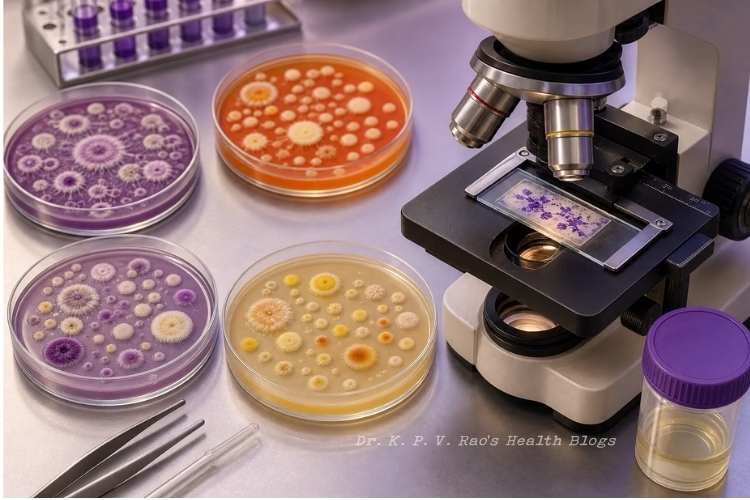
This helps identify exactly which organism is present.
The most advanced stool testing uses genetic technology. By amplifying microbial DNA thousands of times, labs can easily detect and identify organisms, catching pathogens that older methods might miss.
Stool examination interpretation
Results come back as either positive or negative. Positive means the test found something concerning like blood, harmful germs, or abnormal substances. Negative means your stool appears normal with no signs of disease.
Preparing for Your Stool Test: Ensuring Accurate Results
Preparation matters. Even small details can affect your results.
Your healthcare provider will give you specific instructions tailored to your particular test. These often include avoiding certain medications, supplements, or foods for a few days before collection. Some substances can interfere with test accuracy or create false positives.
Tell your doctor about everything you’re taking. Medications and health conditions can influence results, and your provider needs this information to interpret findings correctly.
For infection testing, you’ll receive a sterile collection jar. Keep urine and water out of the sample, as contamination skews results. Collect only stool.
Most samples need to reach the lab quickly, so refrigeration is usually recommended until you can drop it off. Following these guidelines ensures your stool examination provides the most accurate picture of your gastrointestinal health.
The Critical Impact of Stool Examination on Health Diagnosis and Management
Early Detection of Digestive Disorders and Serious Conditions
Stool examination acts as an early warning system for silent digestive diseases.
Colorectal cancer often shows no symptoms until late stages, yet the iFOBT can detect invisible traces of blood long before illness appears.
Stool tests also help identify inflammatory bowel diseases like Crohn’s and ulcerative colitis by revealing inflammation markers early, preventing long‑term gut damage.
Even malabsorption disorders become detectable through stool analysis, allowing timely correction of nutritional deficiencies.
Early diagnosis doesn’t just find problems — it enables treatment at the stage when your body responds best, dramatically improving outcomes.

Identifying and Treating Gastrointestinal Infections
Your digestive system faces constant exposure to potential invaders. Bacteria, viruses, and parasites can all take up residence in your gut, causing symptoms ranging from mild discomfort to serious illness. Stool tests provide the detective work needed to identify exactly which organism is causing trouble.
Take for example, Clostridium difficile, commonly called C. diff. This nasty bacterium often strikes after antibiotic treatment, causing severe diarrhea that can become life-threatening without proper treatment.
Stool examination pinpoints C. diff quickly, allowing doctors to start targeted therapy.”
Helicobacter pylori presents another compelling case. This bacterium burrows into your stomach lining, causing ulcers and increasing cancer risk. Many people carry H. pylori without knowing it. Stool tests catch this infection so doctors can eradicate it before serious damage occurs.
Timing matters tremendously with gastrointestinal infections. If you’ve returned from overseas travel with persistent diarrhea, or if you’re experiencing an outbreak in a community setting, rapid stool examination testing prevents complications. Getting the right treatment quickly means faster recovery and less time feeling miserable.
Monitoring Gut Health and Nutrient Absorption Efficiency using Stool Examination test
Your gut does more than digest food — it hosts trillions of bacteria that shape digestion, immunity, and overall health.
Stool examination reveals the balance of this microscopic ecosystem. When gut flora falters, symptoms like bloating, discomfort, and irregular bowel movements often appear.
Tests can pinpoint imbalances, guiding doctors to restore healthy bacteria. Nutrient absorption is equally critical: even with adequate food intake, poor absorption can starve cells.
Stool fat tests measure how well your body breaks down and absorbs dietary fats, helping identify malabsorption early. These insights make stool analysis a powerful tool for protecting long‑term health.
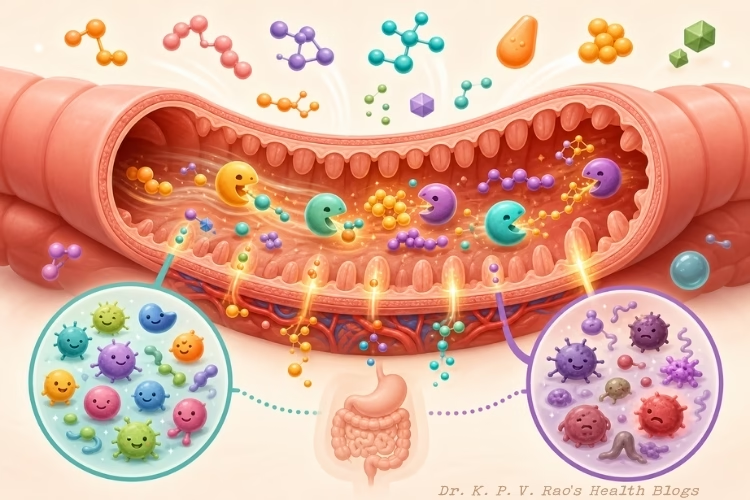
Faecal elastase levels, in stool examination test, check pancreatic function, ensuring this vital organ produces enough enzymes to digest food properly. When gastrointestinal health diagnosis and prognosis reveals absorption problems, doctors can create personalized dietary plans or supplement protocols tailored to your specific needs.
Post-Diagnosis Steps and Understanding Your Results
Getting stool test results can feel overwhelming. What do those numbers and terms actually mean for your health?
- Positive results for a pathogen will name the specific germ causing problems.
- The report might also note abnormal levels of blood, fat, or other substances.
- This detailed information helps your doctor understand exactly what’s happening inside your digestive tract and recommend targeted treatment.
If stool examination suggests cancerous changes, you’ll be referred to an oncologist for specialized care. Don’t panic — many positive screening results turn out to be benign after further investigation.
A positive iFOBT result needs prompt follow-up with your doctor. This doesn’t automatically mean cancer. Many conditions cause blood in stool.
Your doctor will discuss next steps, which typically include colonoscopy for direct visualization of your colon.
Taking action on test results protects your long-term health and catches problems while they remain manageable.
To summarize, let’s watch this short video on the importance of stool examination test-
Affiliate Disclosure
Some links in this article are affiliate links. This means:
- If you click a link and make a purchase, I may earn a small commission.
- You pay nothing extra—your price stays the same.
- Your purchase helps support this site and keeps new content coming.
Thank you for your support
Conclusion
We conclude this article here with a note that I will be publishing an article shortly on Colorectal Cancer in the elderly people and what you should do to prevent it.
Do subscribe to Dr.K.P.V.Rao’s Health Blogs by signing on in the comments with your email ID.
Adios.
